
The famous Russian Seasons that were taking Europe and the United States by storm in the first quarter of the 20th century owe their existence to one man: Serge Diaghilev. A paradox: although he himself had no talent for painting, musical composition, or ballet staging, there is probably no field of art that did not feel his powerful influence. He possessed another gift—the ability to recognize the talent of others—and a boundless passion for art, to the point of giving it a new direction.
The family home
This man, whose refined taste remains unrivalled, was born on March 31, 1872, in the Novgorod region (North-West), far from the country’s cultural centres. Serge was the son of Colonel Pavel Diaghilev. His mother died shortly after his birth, but he grew up in an atmosphere of love, warmth, and comfort created by his stepmother. The family moved to Perm (about 1,500 kilometres east of Moscow), an industrial centre in the Urals.
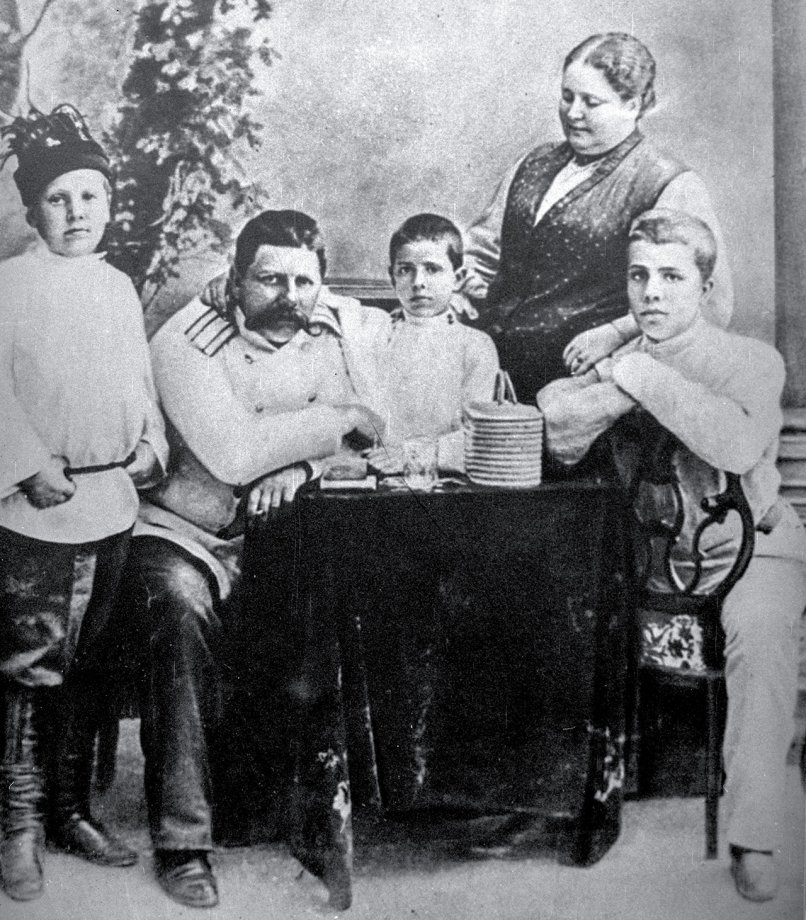
The Diaghilev family: Serge Diaghilev (right), Elena Panaïeva—the father’s second wife, who succeeded Serge’s mother (second from right), Yuri (centre), Pavel Pavlovich—the father (second from left), and Valentin Diaghilev (left).
The two-story house in the style of Russian Classicism that Serge’s grandfather purchased in the mid-19th century still stands in the city center. It was known as the “Athens of Perm,” as Diaghilev’s parents had transformed it into a true cultural hub that gathered the city’s elite every week to sing, play musical instruments, stage performances, and invite touring artists.
Despite the distance separating Perm from Moscow and Saint Petersburg, the family did not feel isolated from the cultural life of the two major cities: Serge’s stepmother, Elena, subscribed to various journals and the latest releases in literature and music. Students at the gymnasium Serge Diaghilev attended remembered that studies were the most tedious part of Serge’s life and that he had learned to devote a minimum of time and energy to them. In contrast, he studied languages, read books, learned the piano, took composition lessons, and performed in plays with great enthusiasm.
Despite the distance separating Perm from Moscow and Saint Petersburg, the family did not feel isolated from the cultural life of the two major cities: Serge’s stepmother, Elena, subscribed to various journals and the latest releases in literature and music. Students at the gymnasium Serge Diaghilev attended remembered that studies were the most tedious part of Serge’s life and that he had learned to devote a minimum of time and energy to them. In contrast, he studied languages, read books, learned the piano, took composition lessons, and performed in plays with great enthusiasm.
Long live the world of the arts!
In 1890, Serge Diaghilev enrolled in the Faculty of Law at St Petersburg University. At the same time, he took composition lessons at the Conservatory with the great Nikolai Rimsky-Korsakov. In his class, he met Igor Stravinsky: twenty years later, he would introduce him to the world.
For the moment, however, it was far more important for Serge Diaghilev to grow closer to his cousin Dmitry Filosofov. Thanks to him, Serge—whose charm had left no one indifferent since adolescence—found himself at the heart of a young artistic circle. Diaghilev missed no concert, exhibition opening, or performance. His new friends swept him into the whirlwind of the artistic world as the Silver Age and modernism arrived, shining brightly in the artists’ association Mir iskousstva (World of Art), founded in particular by Serge Diaghilev and his friends, the painters Alexandre Benois, Léon Bakst, and Valentin Serov. Diaghilev, already a university graduate, finally realized that his interests were a world away from the legal field. It became clear, however, that he could bring even the most complex artistic projects to life. The first were connected with education. As a co-founder of Mir iskousstva, he organized exhibitions of British and German watercolourists, as well as Russian and Scandinavian painters.
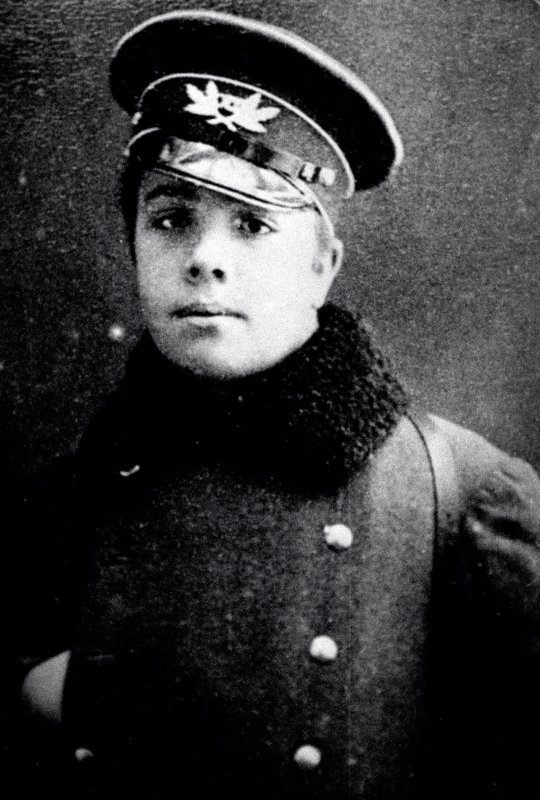
The Russian theatre figure Serge Diaghilev (1872–1929) during his secondary school years.
A new stage in Serge Diaghilev’s activities was marked by the creation of the magazine Mir iskousstva, which brought together Russia’s intellectual and artistic forces. Russian art made a fresh start: it opened up—first to the country, then to the entire world.
European beginnings
In 1906, Serge Diaghilev organized an exhibition of Russian art at the Salon d’Automne in Paris, where he presented works by Alexandre Benois, Ilya Repin, Valentin Serov, and Philippe Maliavin. The great success encouraged him, a year later—again in Paris—to organize historic Russian concerts featuring the music of Rimsky-Korsakov and Rachmaninov. In 1908, he introduced European audiences to Mussorgsky’s opera Boris Godounov.
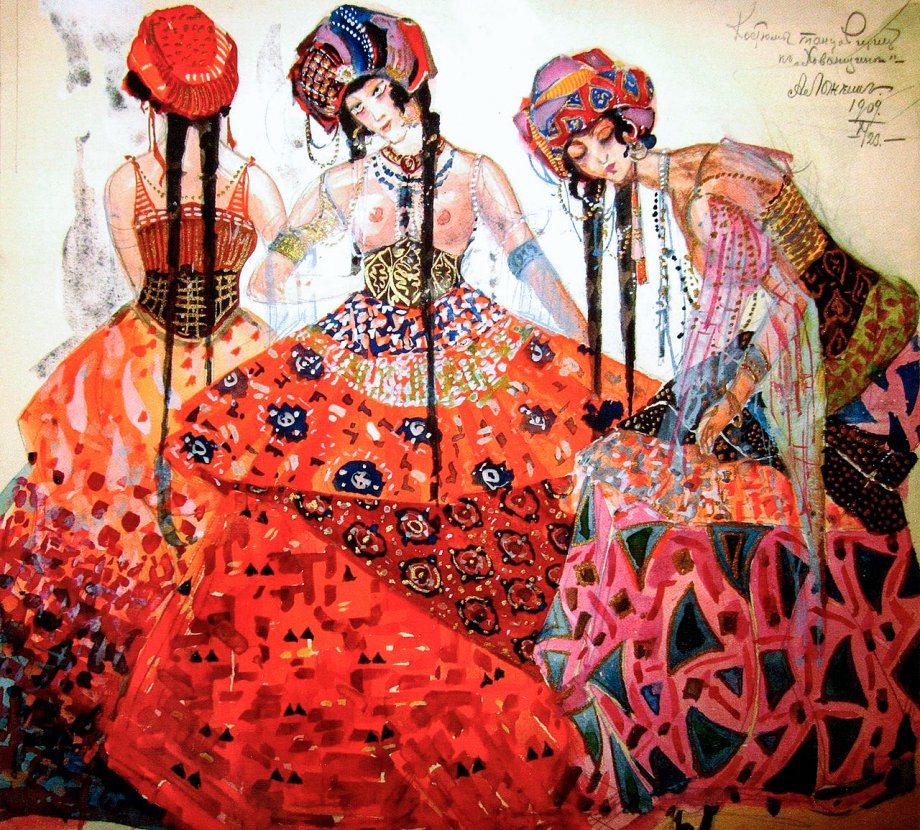
Dancers’ costumes for the opera Khovanshchina. A. Lojkine, 1909.
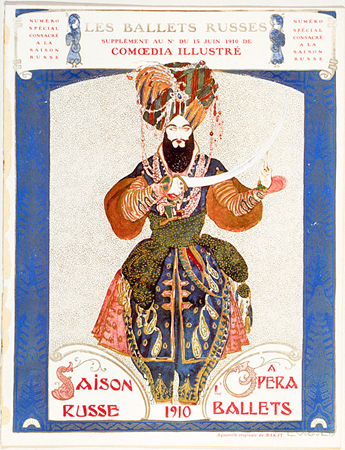
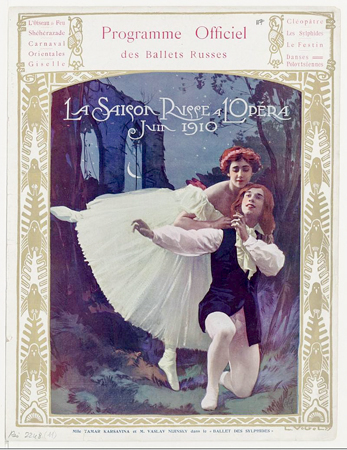
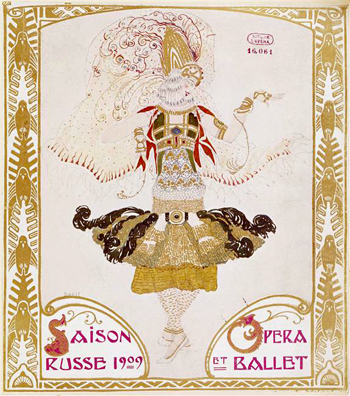
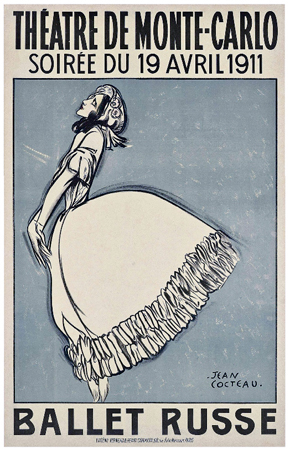
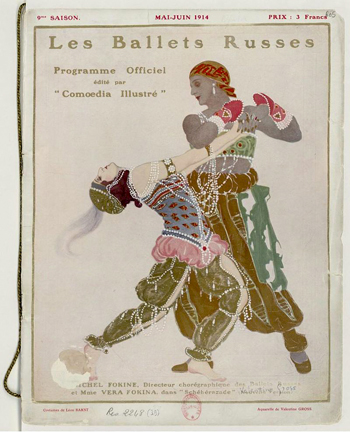
A year later, Serge Diaghilev returned to Paris with a ballet troupe made up of dancers from the Mariinsky Theatre in St Petersburg and the Bolshoi in Moscow, who had come to Paris for their holidays. For his programme, he chose productions by Mikhail Fokine, then 29, who was struggling to make his way at the conservative Mariinsky. His Pavillon d’Armide, his Sylphides, and his Nuit d’Égypte immersed the audience in European art, while the series of performances entitled Festin and Danses polovtsiennes showcased Russian local colour. The sets were created by Alexandre Benois and Léon Bakst. The emblem of this tour was the dancer Anna Pavlova, whose arabesque, captured in Valentin Serov’s pencil drawing, adorned the posters.
 |
 |
 |
 |
 |
 |
 |
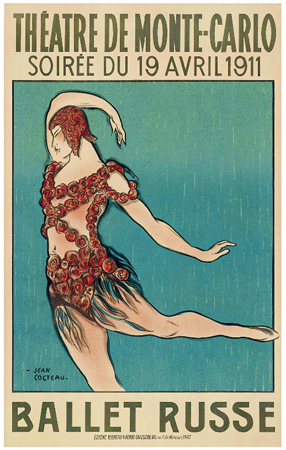 |
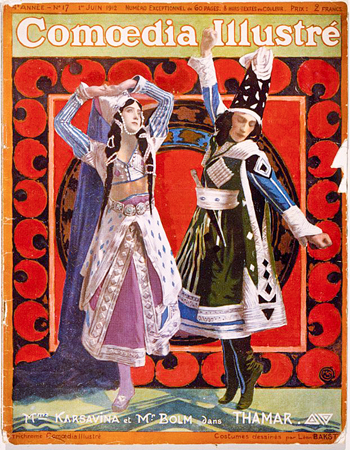
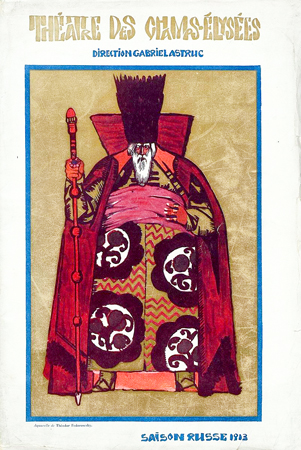
Posters and programmes of the Russian Seasons.
At the beginning of the 20th century, Paris—which had given the world La Sylphide and Giselle—had practically forgotten ballet as an independent art form, reducing it to simple dance scenes in operas. Hence the public’s astonishment at the Russian Seasons, which presented a troupe of true professionals. And when this genre, destined for oblivion because it was considered frivolous, took the form on stage of performances that impressed by their artistic integrity and unique creative freedom, it was a triumph. The “barbaric” art that all Parisian newspapers spoke of on the eve of the first season of the Ballets Russes conquered Europe.
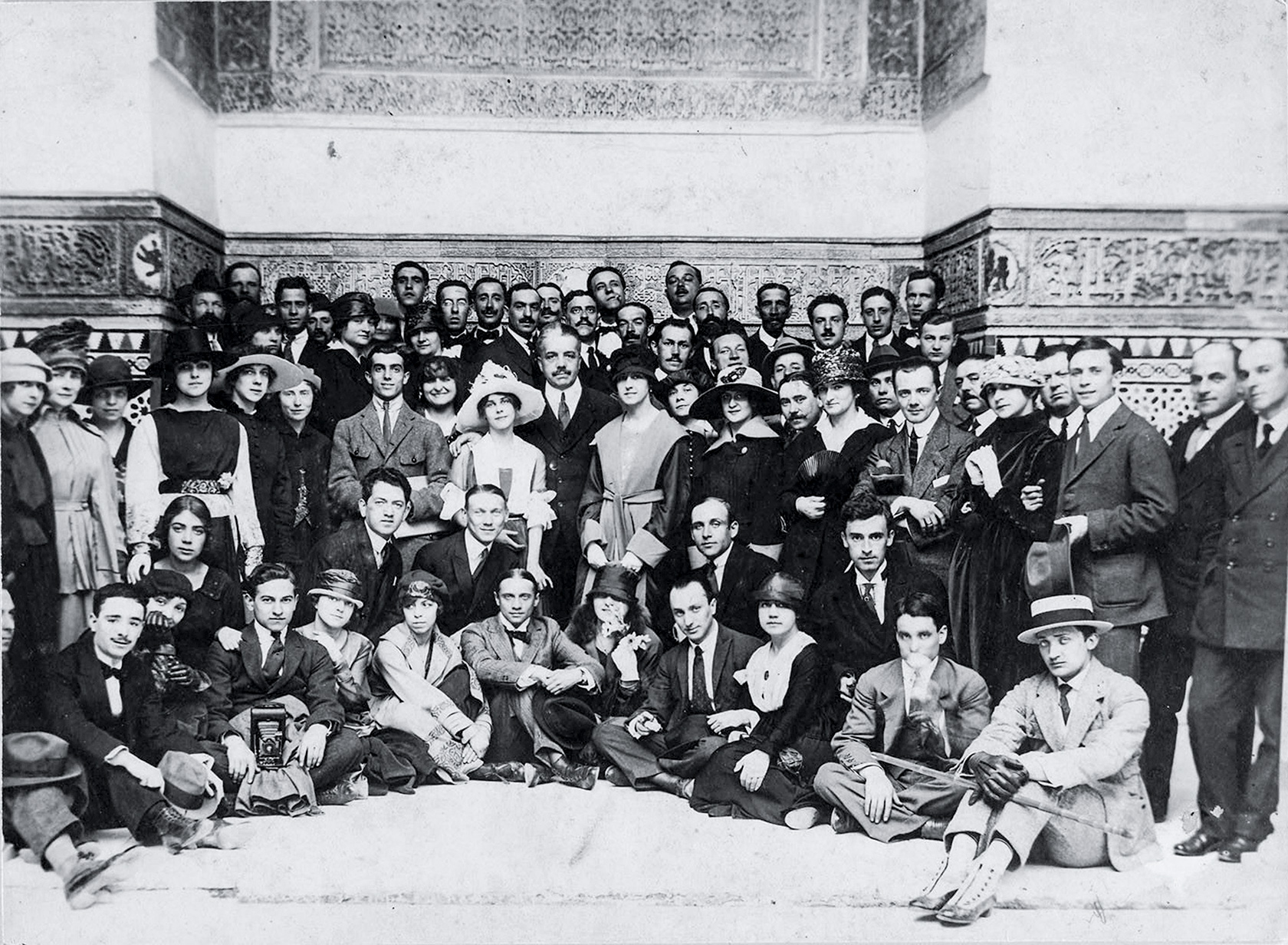
Ballets Russes in Seville. Serge Diaghilev in the centre. Léonide Massine, Lidia Lopokova, Lioubov Tchernicheva, Sergei Grigoriev.
The triumph of the “barbarians”
The conflict with the management of the Imperial Russian Theatres, which looked unfavourably on Serge Diaghilev’s triumph and feared its dancers’ participation in his radical experiments, forced him to create his own ballet company. Its stars were Tamara Karsavina and Vaslav Nijinsky. The lack of stable funding and an endless succession of tours compelled Serge Diaghilev to abandon multi-act ballets.
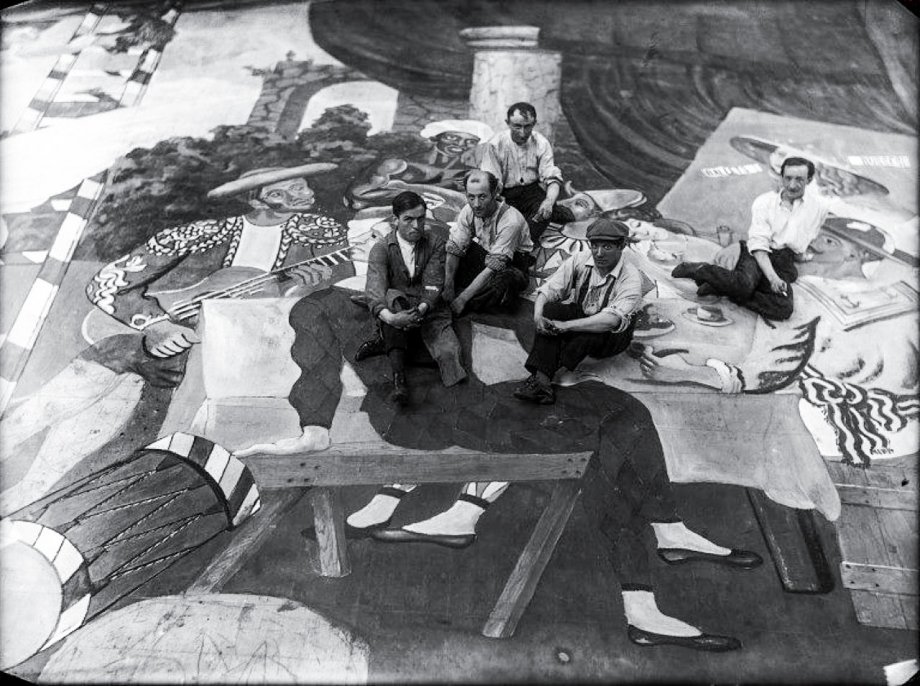
Pablo Picasso (wearing a beret) and set designers seated on the stage curtain created for Léonide Massine’s ballet “Parade,” staged by Serge Diaghilev’s Ballets Russes at the Théâtre du Châtelet, Paris, 1917.
He focused primarily on one-act productions that allowed for the presentation of three different performances in a single evening. It was under his impetus that the three-part ballet evening format remains the most popular in Western dance.
During the early years, each new season was more successful than the last. Initially, Serge Diaghilev captivated audiences with typically Russian themes in Petrushka, The Firebird, and Scheherazade, but their exoticism proved more radical than European innovations. The scandalous 1913 production of Igor Stravinsky’s ballet The Rite of Spring, choreographed by Vaslav Nijinsky, marked a turning point in the history of the Ballets Russes: even before the First World War, it severed Serge Diaghilev and his troupe from Russia. The dress rehearsal of the ballet turned into a literal confrontation: the audience did not divide along ethnic or class lines, but split between supporters of modern and traditional art, the former armed with chairs and the latter charging with umbrellas.
During the early years, each new season was more successful than the last. Initially, Serge Diaghilev captivated audiences with typically Russian themes in Petrushka, The Firebird, and Scheherazade, but their exoticism proved more radical than European innovations. The scandalous 1913 production of Igor Stravinsky’s ballet The Rite of Spring, choreographed by Vaslav Nijinsky, marked a turning point in the history of the Ballets Russes: even before the First World War, it severed Serge Diaghilev and his troupe from Russia. The dress rehearsal of the ballet turned into a literal confrontation: the audience did not divide along ethnic or class lines, but split between supporters of modern and traditional art, the former armed with chairs and the latter charging with umbrellas.
From that moment on, the Ballets Russes definitively ceased to be an “exhibition of achievements” of official Russian art, although for several more years Serge Diaghilev continued to work almost exclusively with his compatriots.
 |
 |
 |
 |
 |
 |
 |
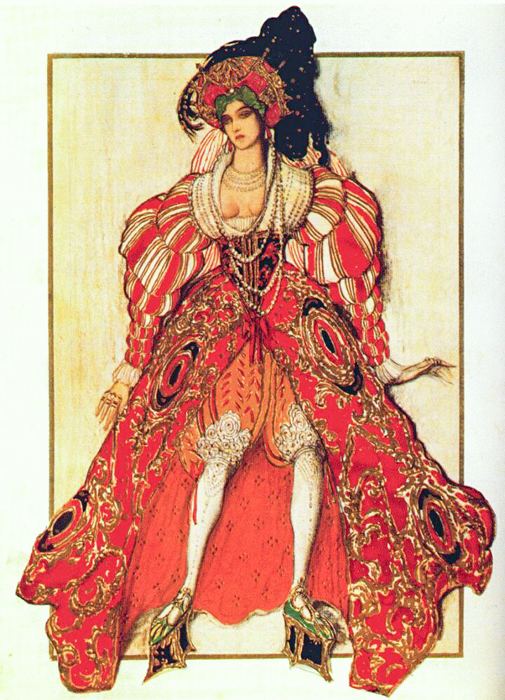 |
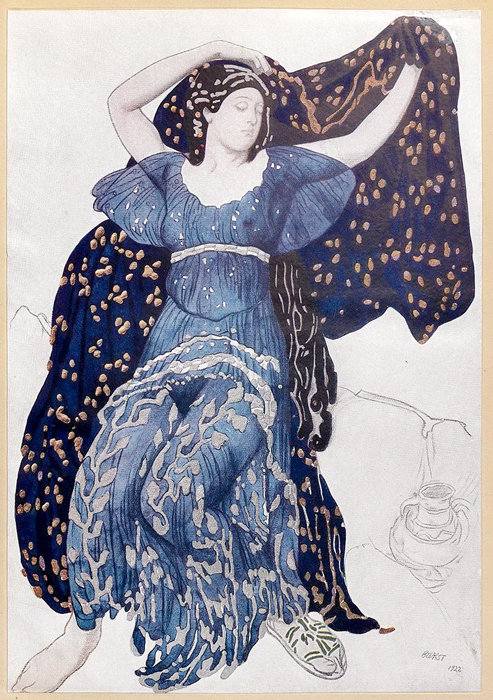
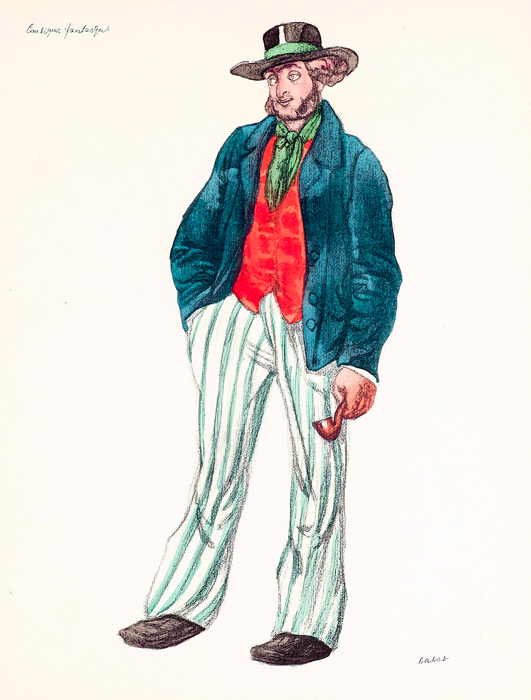
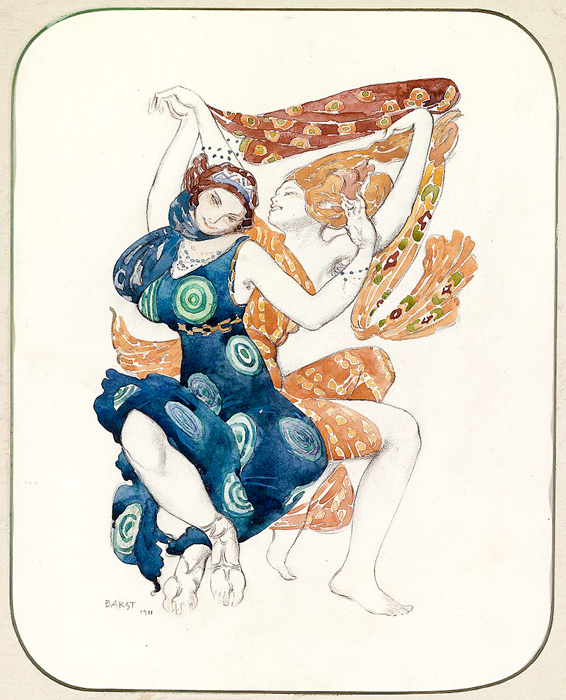
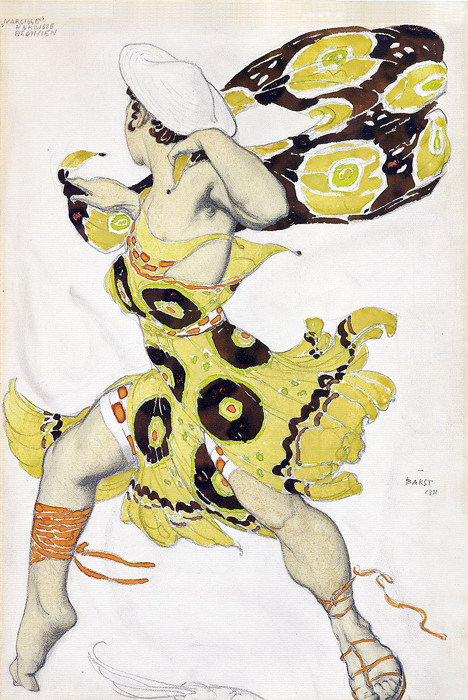
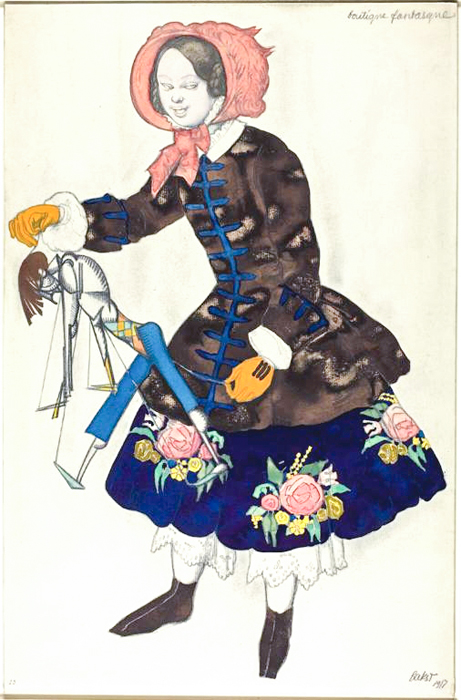
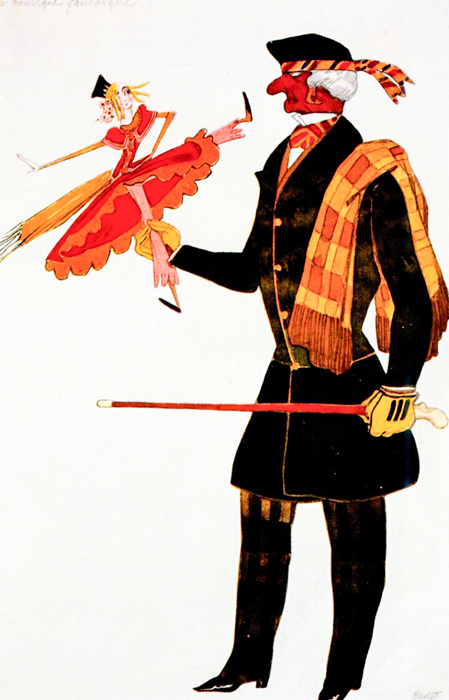
Costume sketches for the Russian Seasons.
Ahead of his time
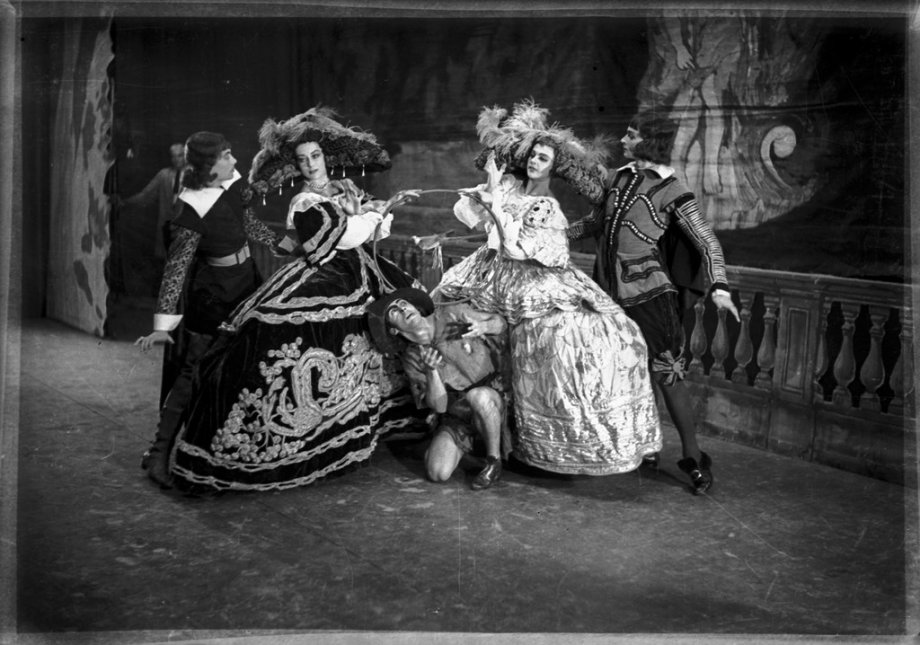
Geoffrey Ingram collection of photographs devoted to the Ballets Russes’ Australian tour, 1936–1940. Dancers: Yvonne Leiberandt, also known as Irina Zarova; Alberto Julio Rayneri Alonso, generally shortened to Alberto Alonso.
The next milestone in Serge Diaghilev’s career was the premiere of the ballet Parade, for which he assembled an international team: composed by the Frenchman Erik Satie based on a poem by Jean Cocteau, with sets and costumes by Pablo Picasso, all choreographed by the Russian Léonide Massine. This “Cubist” ballet
was presented only once, as it triggered public hostility. Yet, this was Diaghilev’s way of making his statement. Even without regular funding, even while entirely dependent on public success, he did not shrink from what he considered the primary quality of art: experimentation and forward movement. This character trait often plunged Serge Diaghilev and his troupe into the depths of financial catastrophe, to the point where he became unable to pay for his hotel room. However, he found it impossible to betray his principles, and it is thanks to the Saisons Russes that the world discovered Nicholas Roerich, Natalia Goncharova, Claude Debussy, Sergei Prokofiev, Vaslav Nijinsky, and George Balanchine.
was presented only once, as it triggered public hostility. Yet, this was Diaghilev’s way of making his statement. Even without regular funding, even while entirely dependent on public success, he did not shrink from what he considered the primary quality of art: experimentation and forward movement. This character trait often plunged Serge Diaghilev and his troupe into the depths of financial catastrophe, to the point where he became unable to pay for his hotel room. However, he found it impossible to betray his principles, and it is thanks to the Saisons Russes that the world discovered Nicholas Roerich, Natalia Goncharova, Claude Debussy, Sergei Prokofiev, Vaslav Nijinsky, and George Balanchine.
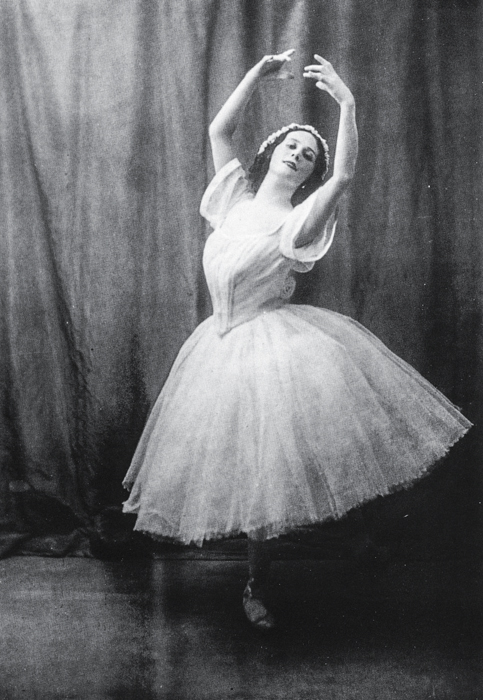 |
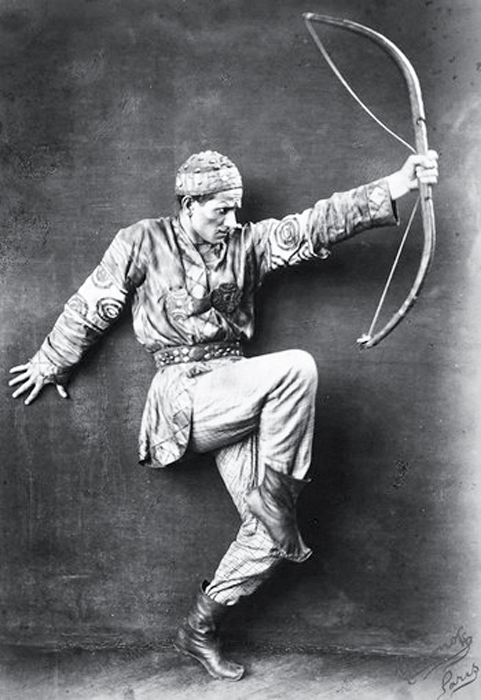 |
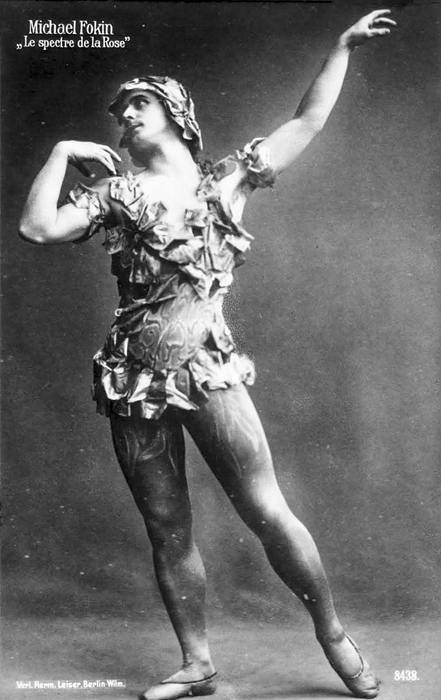 |
 |
 |
 |
 |
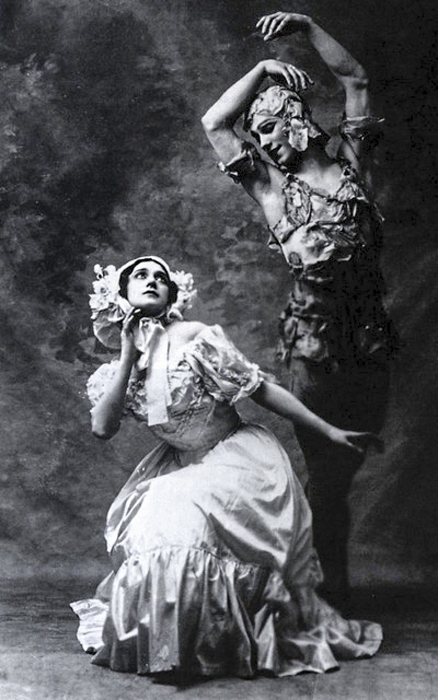 |
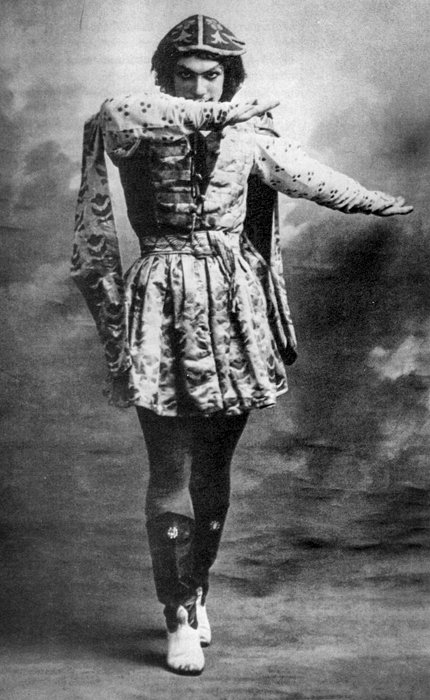
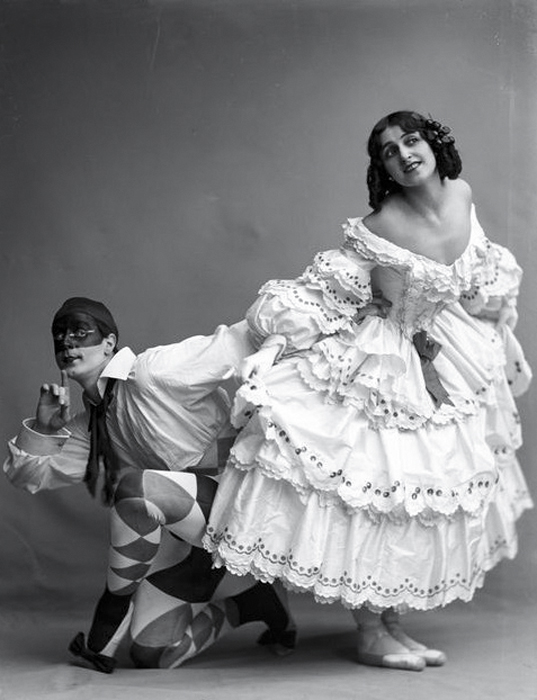
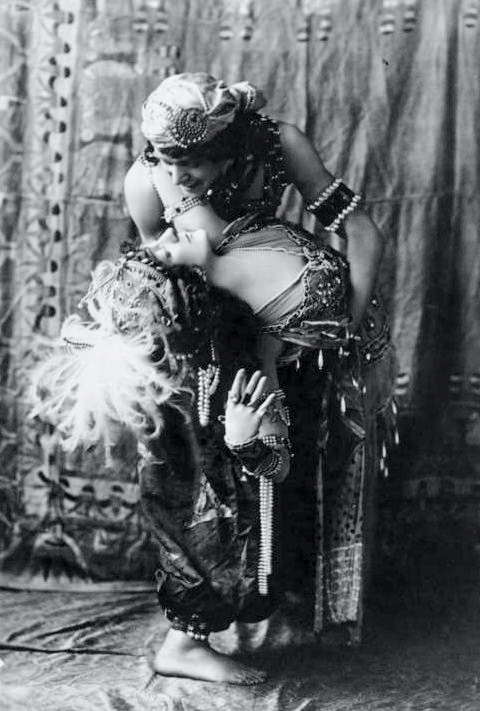
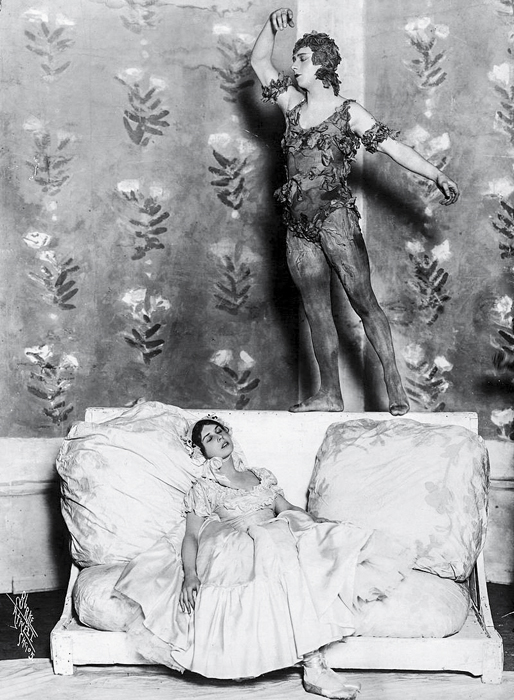
Actors of the Russian Seasons troupe. Individual portraits: Anna Pavlova, Adolph Bolm, Michel Fokine, Vaslav Nijinsky. Double portraits: Michel and Vera Fokine, Gertrude Hoffmann and Theodore Koslov, Lidia Lopokova and Alexandre Gavrilov, Tamara Karsavina and Vaslav Nijinsky.
Interested only in everything innovative, promising, and daring, Serge Diaghilev parted ways without regret with troupe members incapable of generating new ideas. He was a great lover of ancient art, and his first steps were linked to the revival of 18th-century Russian painters, while the “Parisian” stage was marked by the return of the great ballet Giselle to its native land and the first French presentation of Marius Petipa’s The Sleeping Beauty. But he was also drawn to the depth of distant and unknown spaces. He was the first to present Europe with a panorama of Russian art that became a “nutritive” environment for the 20th-century Western world. Serge Diaghilev passed away in 1929 at the age of 57 in Venice, a city he particularly loved. Yet even today, the world of the arts follows the path he charted.
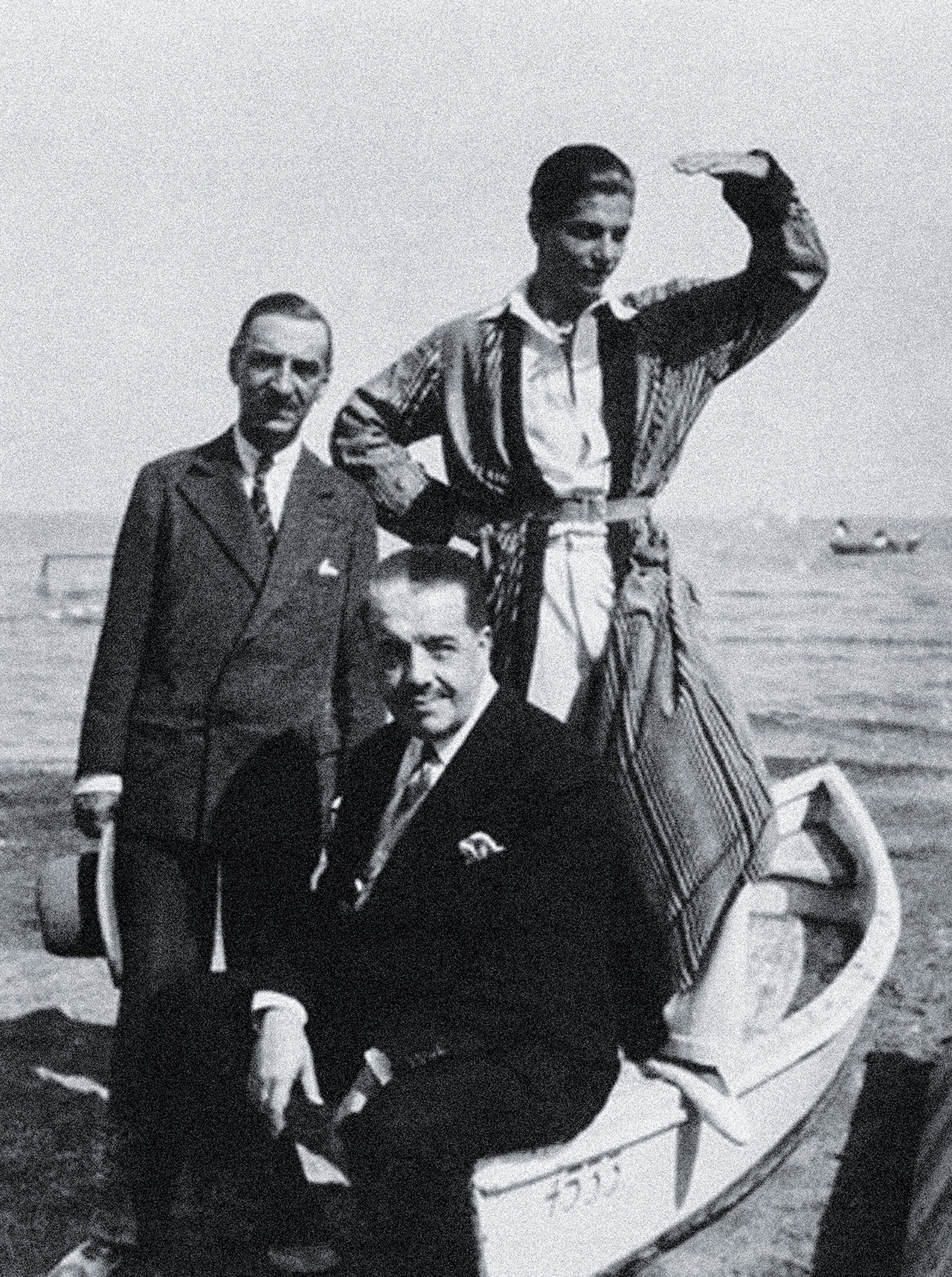
Walter Nouvel, Serge Diaghilev, and Serge Lifar on the Lido, in Venice.
Source: https://fr.rbth.com