
The House of “C. Fabergé” in Saint Petersburg was the jeweler to the courts of Russia, Great Britain, Sweden, and Siam.
Peter-Carl Fabergé (Carl Gustavovich in Russian) was born in Saint Petersburg on May 30, 1846, into the family of jeweler and master goldsmith Gustav Fabergé, who had opened a modest workshop on Bolshaya Morskaya Street in that city.
The Fabergés were originally French Protestants (Huguenots) from Picardy; their ancestors had been forced to flee that country after the revocation of the Edict of Nantes by Louis XIV. Passing through Northern Germany, they first settled in the Baltic province of Russia before establishing themselves in Saint Petersburg. In 1872, Carl took over from his father, who had retired.
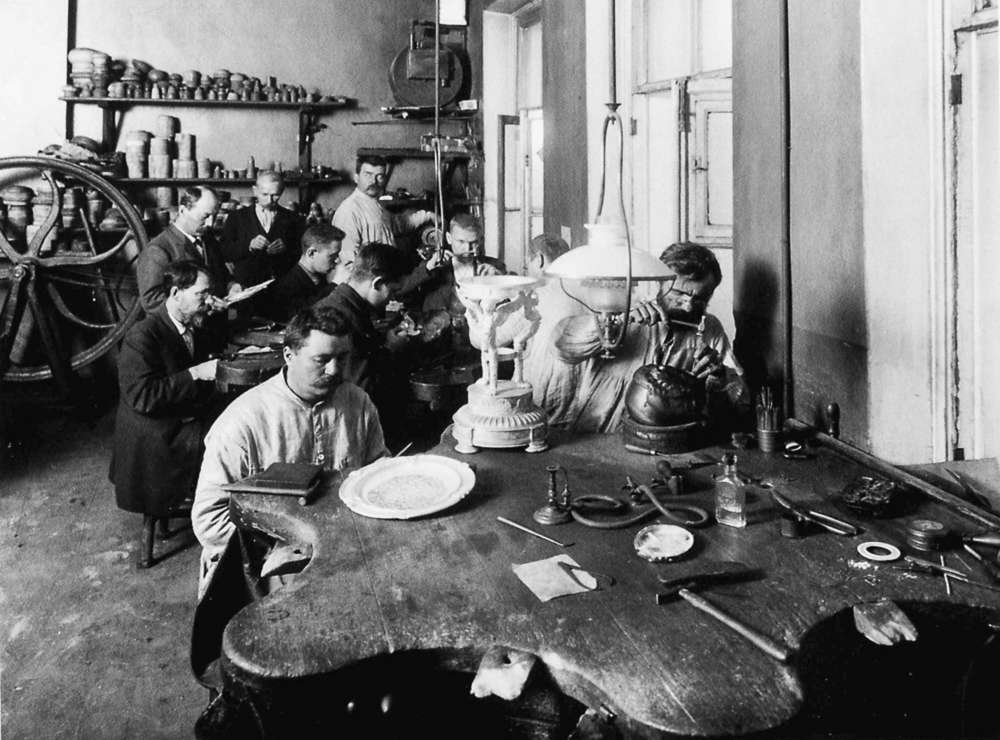
He quickly moved from the modest workshop to more spacious premises located across the street. After a few years, the size of this workshop had doubled.
In 1900, C. Fabergé moved into a new building that he had acquired on the same street and renovated according to his own design in the English Gothic style: the façade was clad in splendid Finnish marble.
On the ground floor of this house, renovated by the celebrated architect Carl Schmidt, son of a cousin of Carl Fabergé, on the street that in 1902 took the name Morskaya (previously Bolshaya Morskaya), was a large jewelry store. There were three additional floors. On the top floor was Fabergé’s elegant apartment, designed and decorated to his taste. His study and office, paneled in oak, were particularly successful; the most interesting and luxurious room was the two-story library; the boudoir of his wife, Augusta Fabergé, née Jacobs, was very elegant. The latter’s father was a renowned master ebony sculptor: he created numerous first-rate objects for Nicholas I, Alexander II, and Alexander III.
The new Fabergé building housed several exhibition rooms in which jewelry articles, carved pieces, and silverware were sold; there were also the accounting department and the workshops of the designers and sculptors. In the specialized library were gathered books on all possible genres and styles of art; particular attention was paid to jewelry—it was a unique library. In several rooms were displayed models in wax, modeling clay, metal, enamel, etc. C. Fabergé installed his own workshop in this house in order to better oversee the manufacture of objects. He was himself a recognized painter and designer, and most articles were made according to his projects or ideas, which he conveyed to his designers; he controlled everything down to the smallest detail.
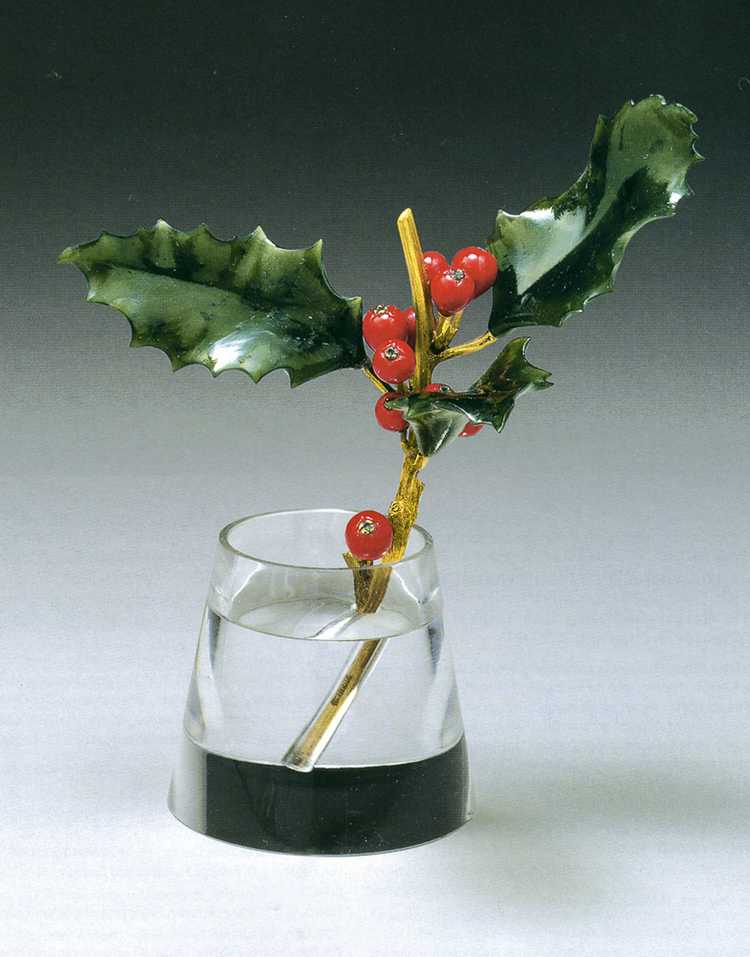
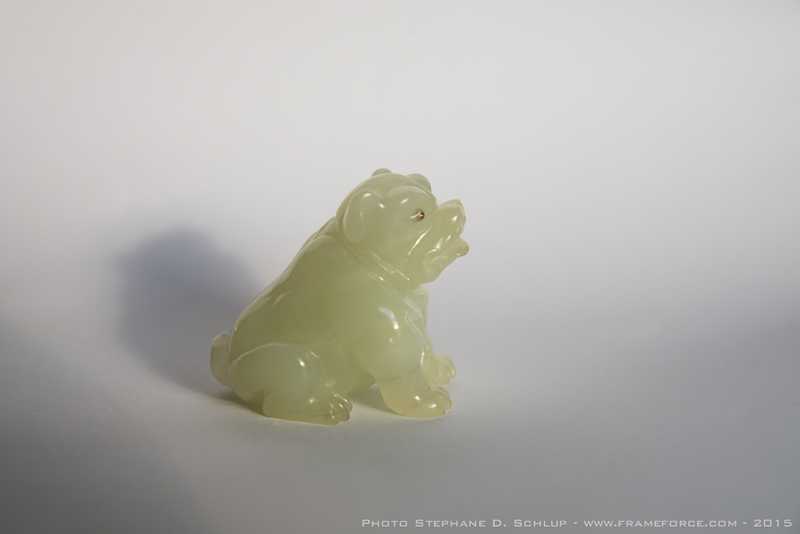
The enterprise also included a specialized factory and sculpture workshops, which produced multiple articles in fine stone of all kinds, primarily from Siberia: animal figurines, from the smallest to the largest; flowers and plants, faithful copies of the originals, in rock crystal vases. All sorts of whimsical objects were also created, for example Russian types: soldiers, peasants, peasant women, Cossacks, etc.
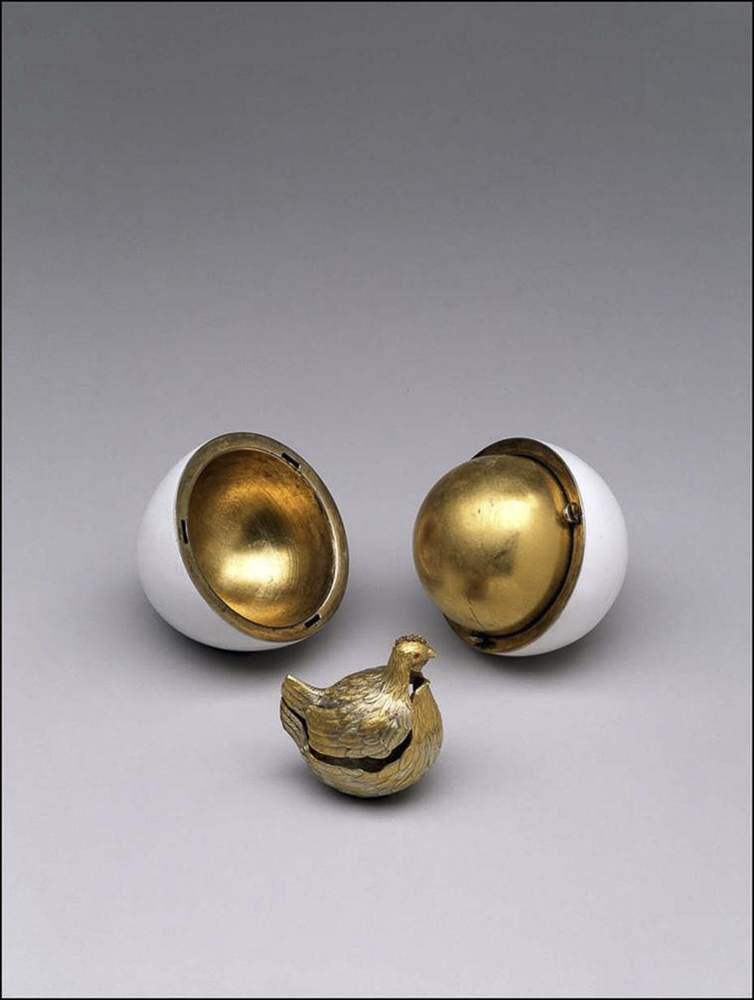
One day, I believe it was in 1883, Carl Fabergé had the fortunate idea of creating an original Easter egg, and he shared it with Alexander III.
This delightful object was greatly appreciated by His Majesty, who commissioned one from him and expressed the wish that each year, on the eve of Easter, a new egg be delivered to him at the Palace.
This first specimen was made of gold and covered with white enamel; the egg yolk, in gold, contained a hen with wings in gold of various colors which in turn enclosed a miniature in diamonds of the imperial crown in which was found a small ruby egg that could be worn as a pendant.
From then on, each year, my father designed a new egg with a surprise that the Tsar offered to his wife, Empress Maria Feodorovna.
After the death of His Majesty, my father was obliged to create the eggs in pairs for Tsar Nicholas II, who gave them as gifts to his wife, Alexandra Feodorovna, and to the Dowager Empress. He created fifty eggs in total.
Carl Fabergé participated in numerous exhibitions. He achieved great success at the Fine Arts and Jewelry Exhibition in Nuremberg in 1885, where he presented copies of the superb gold ornaments of ancient Greece, the originals of which are in the Hermitage Museum. These jewels were made several centuries before our era. C. Fabergé received the gold medal.
In 1888, at the Nordic Exhibition in Copenhagen, he received a Diploma of Honor.
He then took part in the Russian Exhibition in Nizhny Novgorod in 1896 (gold medal) and earned the right to display the State coat of arms on his sign; before that, at the Russian Exhibition of 1882, he had won the gold medal. The following year, in 1897, Fabergé received from the King of Sweden and Norway the title of court jeweler, and Evgeny Fabergé, a member of the jury, won the gold medal.
But Fabergé achieved his greatest success at the Universal Exhibition in Paris in 1900, where he presented his creations outside the competition, sat on the jury, and was decorated with the Legion of Honor, while his eldest son Evgeny was decorated with the palm, symbol of the officers of the Academy of Fine Arts, and his principal goldsmiths won gold and silver medals.
Tsar Alexander III conferred upon C. Fabergé the title of supplier to the Imperial Court, and Nicholas II that of court jeweler.
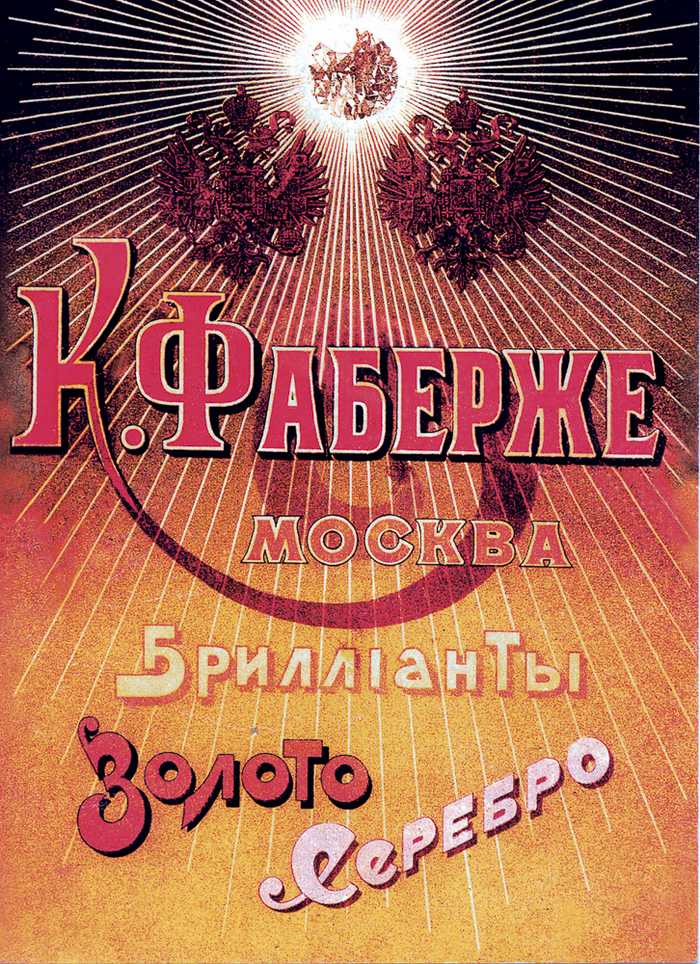
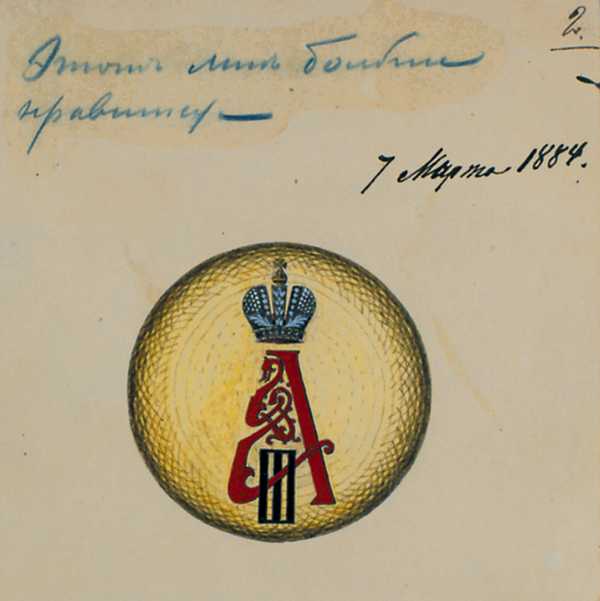
In addition to the parent house in Saint Petersburg, Fabergé owned a Moscow branch with a factory that produced silverware and jewelry. He then opened a branch in Odessa with workshops, then another in Kiev five years later. There was a large store in London whose first manager was Arthur Baud, succeeded by H. Bainbridge and Nicolas Fabergé, Carl’s youngest son. His Majesty King George V made C. Fabergé the court jeweler.
At the invitation of His Highness Prince Chakrabongse of Siam, who had studied in Petersburg and spoke Russian perfectly, Fabergé undertook a journey to Siam (present-day Thailand) and visited the palaces of the Indian maharajahs. His Majesty King Chulalongkorn conferred upon him the title of court jeweler and enameler; he was a great admirer of his art.
Following the Universal Exhibition of 1900, Fabergé acquired a large clientele not only in Paris, but also throughout the civilized world, both in Europe and in America.
I am not speaking of the Russian grand princes or a significant portion of the European nobility who were regular clients of the house. During official visits by foreign monarchs to Petersburg, the program obligatorily included a stop at the Fabergé store. Not one of them refused the visit.
When the revolution broke out, the Fabergé stores remained open; they were closed only for a short time. The Fabergé family lived for a year and a half under the new regime, including one year under the Bolsheviks. Then Carl emigrated to Riga, which was then the capital of Latvia.
When the Bolsheviks stormed the city, he managed with difficulty to flee to Germany with a few friends. But when revolution began there as well, he was forced to go first to Frankfurt am Main, then Homburg, and finally Wiesbaden.
It will be easily understood that all these moves and this stressful existence began to compromise his health, all the more so as he was already seventy-four years old.
In Wiesbaden, he fell ill, whereas in Russia he had always been distinguished by robust health.
In June 1920, his wife and his son Evgeny transported him to Lausanne. The good Swiss air had a beneficial influence on him and he felt better; he even sometimes took walks on Lake Geneva to Ouchy, Montreux, or Nyon with his grandson Peter, Agathon’s second son. He suffered, however, from this inactivity; he had always been so hardworking, active, intelligent, diligent.
This life of idleness was unbearable to him. He often repeated: “Not being able to work or be useful is not a life. It has no meaning.” His heart was weakened by fifty years of creative work. After having founded a first-rate jewelry enterprise, known success and renown throughout the entire civilized world, this man was obliged to watch his work and his existence collapse in such a foolish and senseless manner. It finished him.
Carl Fabergé passed away peacefully, without suffering, at dawn on September 24, 1920, in the presence of his wife, one hour after smoking half a cigarette. In accordance with his last wishes, his body was cremated at the Lausanne crematorium to the sounds of Beethoven’s Mass, which he loved so much. Augusta Fabergé died in Cannes on January 27, 1925. In May 1930, I transported my father’s ashes there and buried him in my mother’s tomb. I placed on their grave a funeral monument both elegant and simple, for my parents were throughout their lives simple and elegant people. It is sculpted in black Swedish porphyry with gold letters, according to my father’s wish.
Brief account by Evgeny Fabergé on February 13, 1937, at the request of Henry Bainbridge (archives of Tatiana Fabergé, summary)