
Attention collectors and enthusiasts of Russian art: a collection of masterpieces from the House of Fabergé, as well as objects of imperial provenance and paintings by Russian and Soviet artists, including those by Nicolas Roerich and Natalia Goncharova—310 lots in total—will go under the hammer at Christie’s on November 27. According to estimates by Margo Oganesian, a specialist in the Applied and Decorative Arts department, the majority of clients—between 70% and 80%—will be Russian-speaking. By RBTH
Fabergé Goldsmithery
A rare collection of objects designed by the famous jewelry house, which had the privilege of being named supplier to the Imperial Russian Court, is already designated as a favorite for the upcoming auctions. Carefully assembled over 30 years ago by an ardent Fabergé enthusiast, it does not, however, include eggs or picturesque flowers, with which some tend to associate Fabergé.
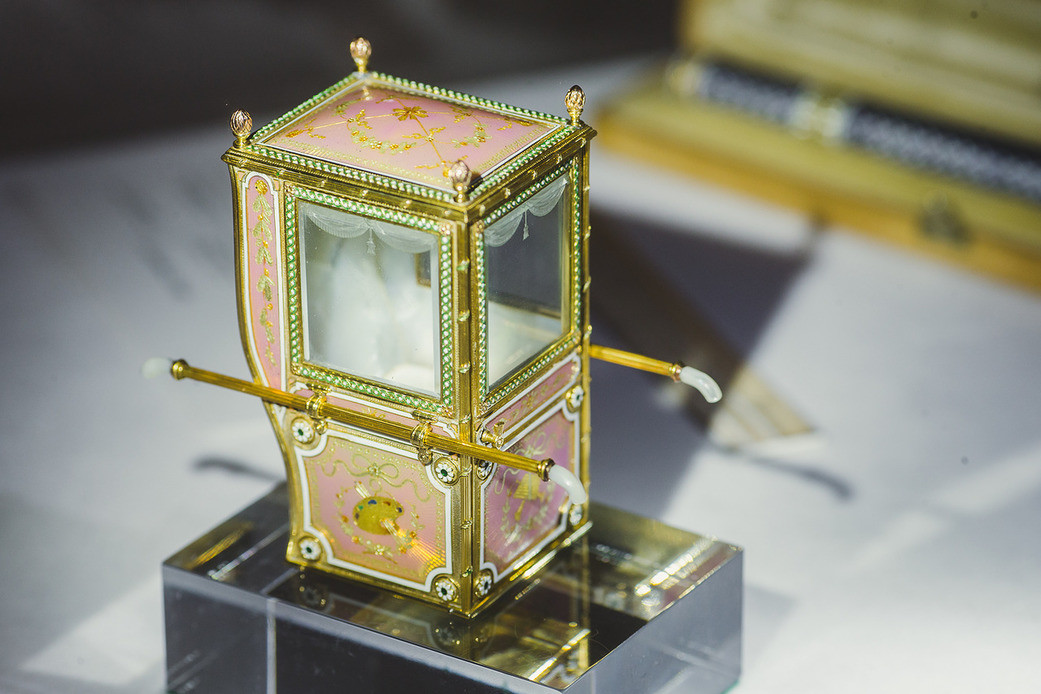
As Alexis de Tiesenhausen, International Director of the Russian Department at Christie’s, reminds us, the miniature pieces signed by Fabergé, of which only about ten examples exist, are often overlooked. One of these, a sedan chair in gold and guilloché enamel, lined with mother-of-pearl, will be offered for sale. The last time a similar miniature piece of furniture appeared at auction was over ten years ago, Christie’s notes. That lot sold for a staggering $2.28 million (approximately €1.97 million, at the current exchange rate).
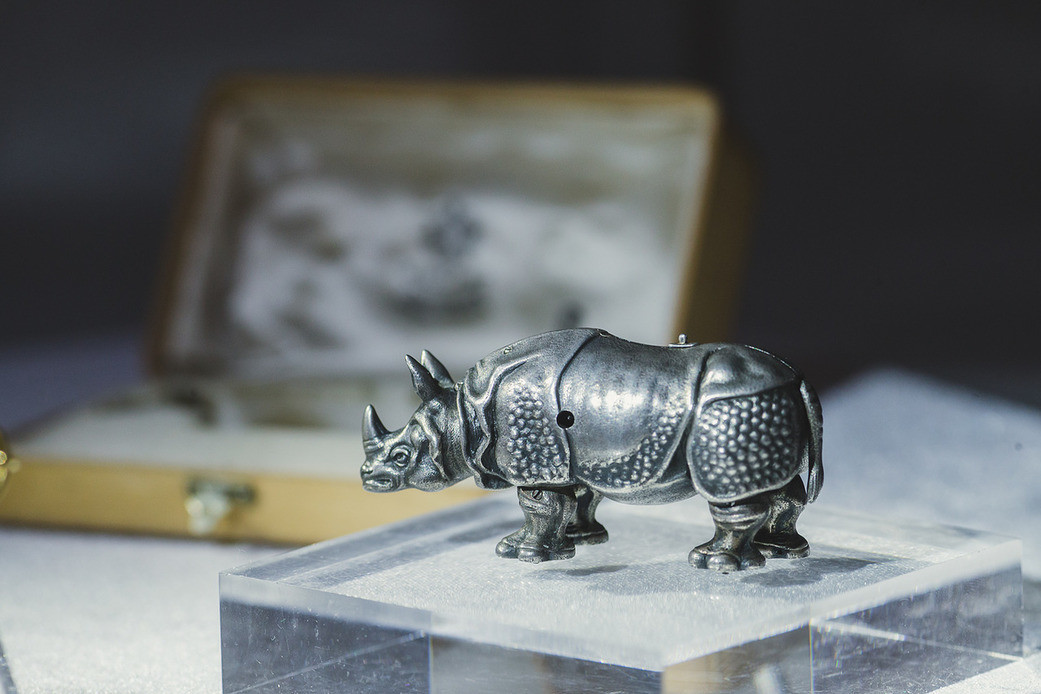
One of the main highlights of the upcoming sales is a mechanical silver rhinoceros, estimated at $394,200 – $525,600 (approximately €340,000 – €453,000). This lot is extremely rare — only four pieces have been preserved to this day.
Read also: The Fabergé Epic from Splendor to the Fall of Imperial Russia
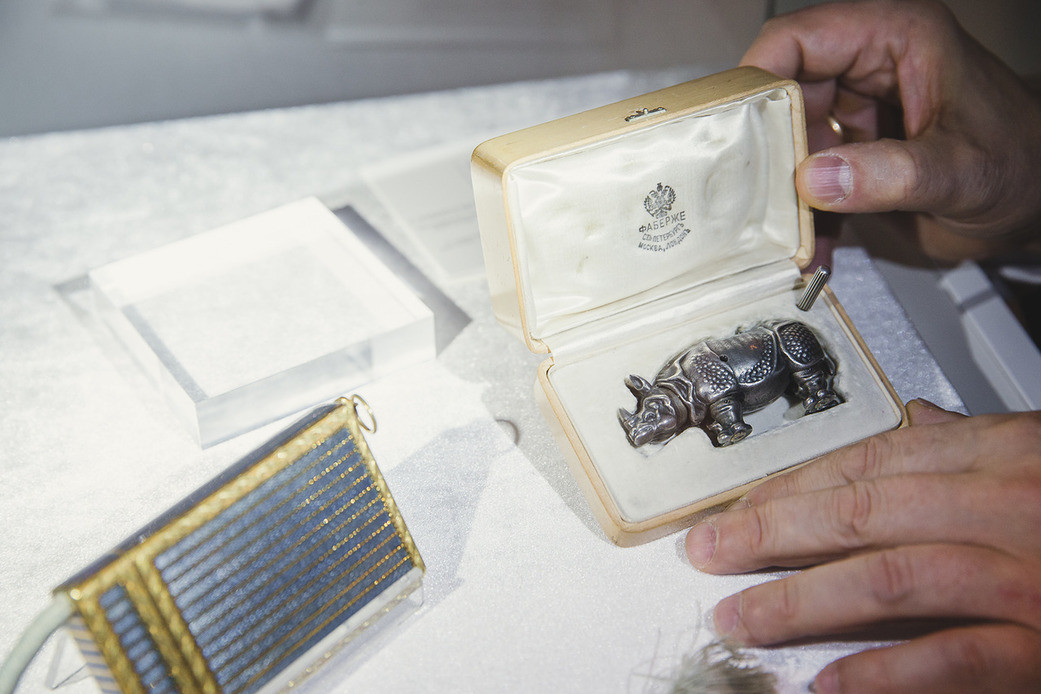
The one to be sold by Christie’s was given by Empress Maria Feodorovna of Russia to her grandson, Prince Vassili Alexandrovich, when he was suffering from typhus. The now-deceased collector bought this rhinoceros from the latter’s descendant.
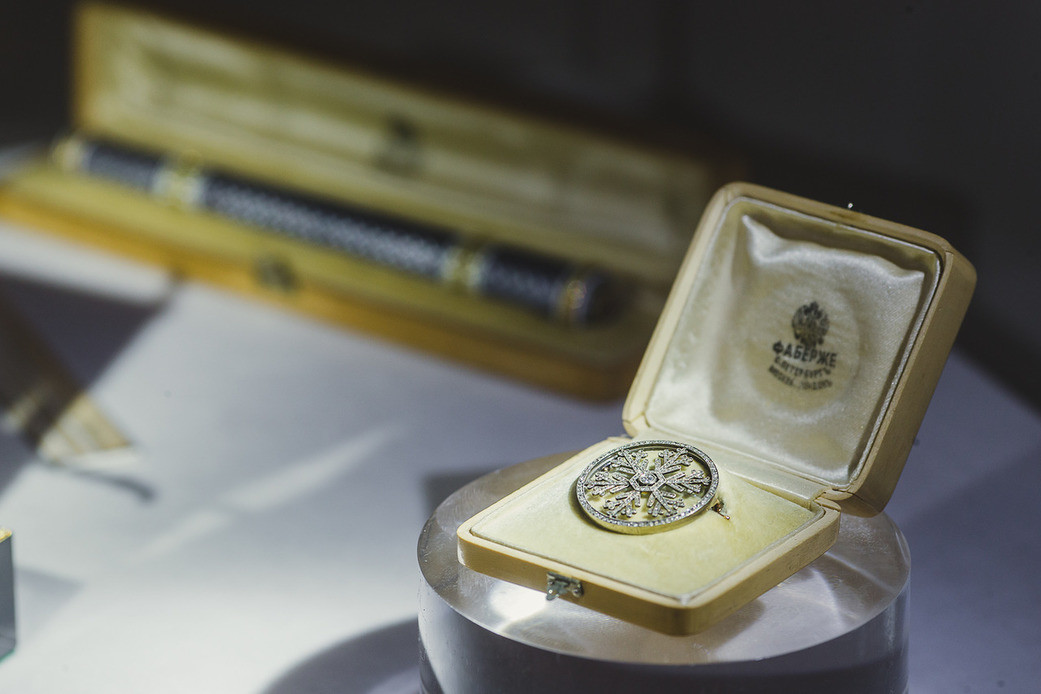
Another essential jewel will also be offered for purchase: a Fabergé brooch in the shape of a snowflake. Crafted in silver, gold, diamonds and rock crystal, it was created from sketches by Alma Pihl, the first and only woman to have worked for the renowned jewellery house.
Read also: The jewellers who supplied the tsars
Other Witnesses of the Imperial Era
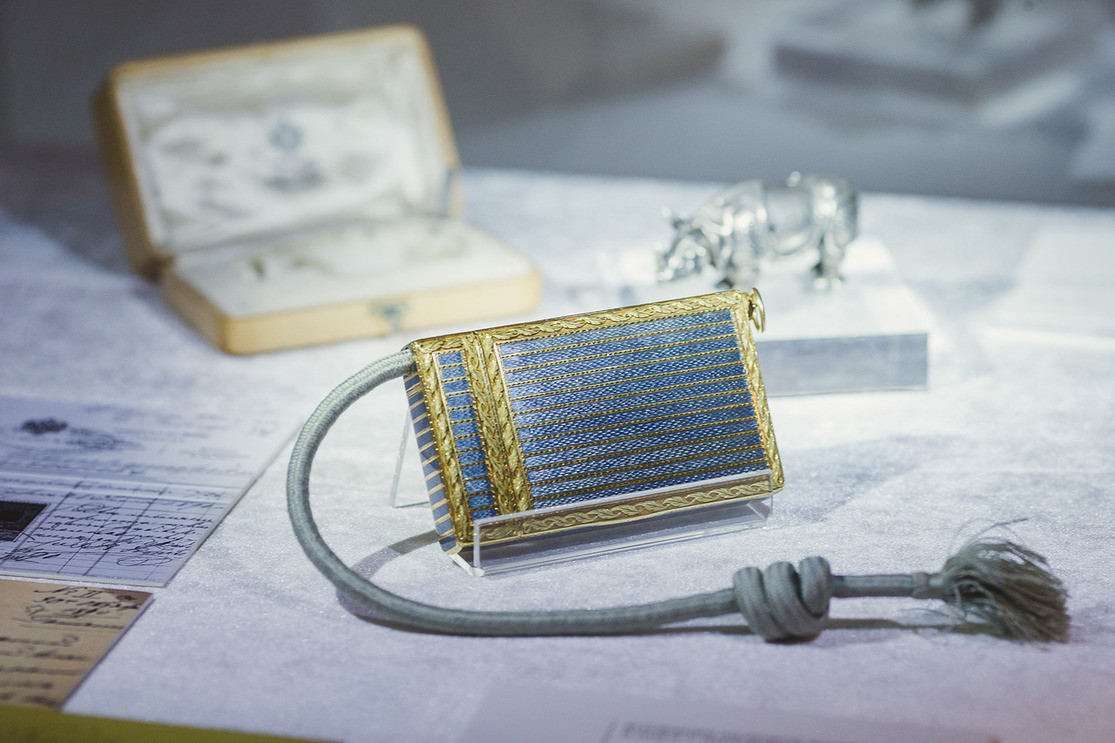
In addition to pieces made by the Fabergé jewelry house, other pre-revolutionary works will be presented at auction, including the cigar case given by Maria Feodorovna to her husband Alexander III in 1890 on the occasion of their 24th wedding anniversary.
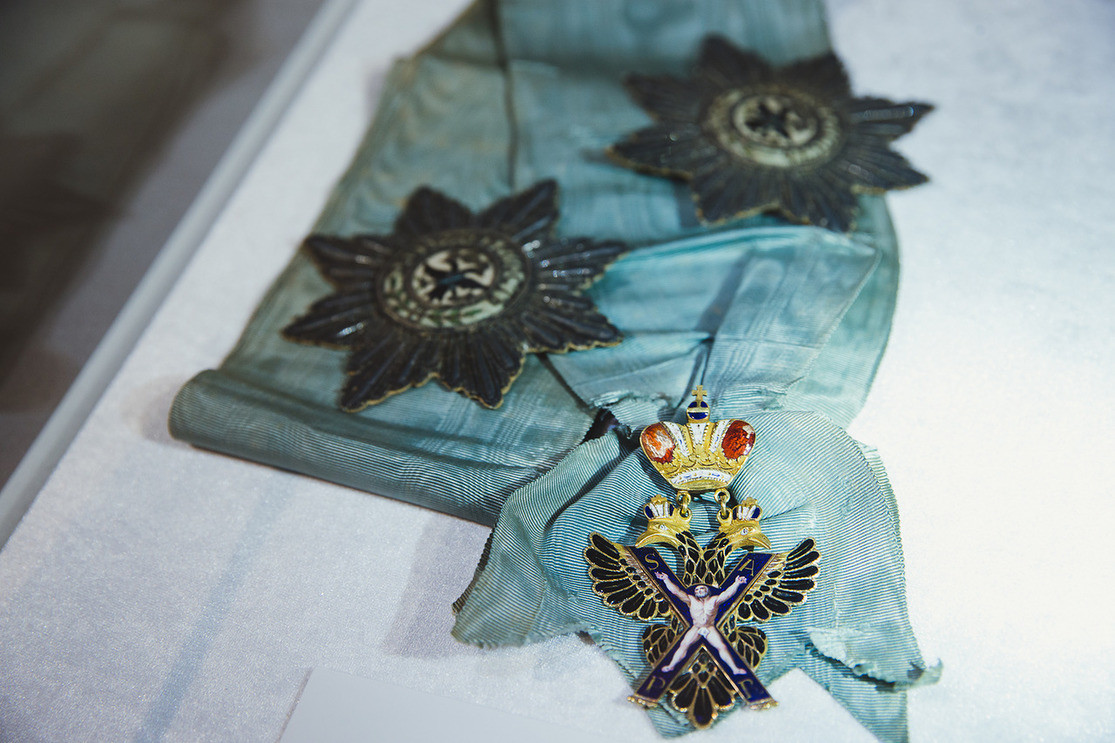
Also on display will be a monumental vase manufactured by the Imperial Porcelain Factory in Saint Petersburg and dating from the time of Nicholas I, Imperial Orders of Saint Andrew the First-Called, as well as a gold and ivory dagger that belonged, according to the gold inscription on its scabbard, to Imam Shamil, warlord of the Caucasian tribes between 1834 and 1859.
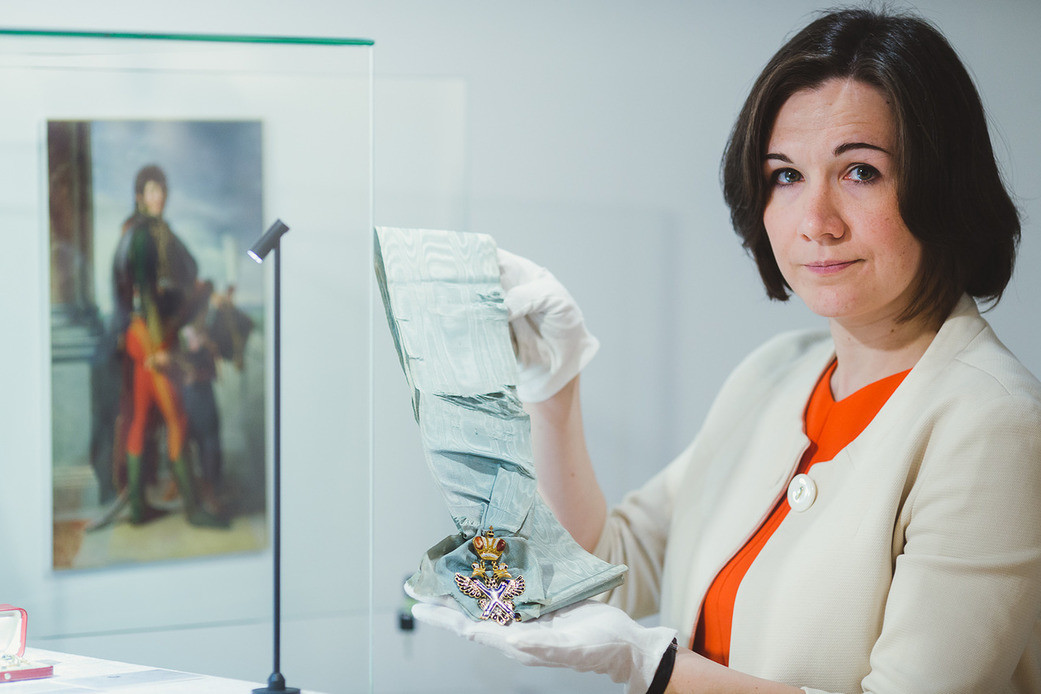
Margo Oganesian
Alexander Murachkine / Christie’s
Decades of Russian Pictorial Art
Paintings by artists such as Natalia Goncharova, Vasily Vereshchagin, Apollinary Vasnetsov, Abram Arkhipov, and Nicholas Roerich will also find their place at Christie’s auctions.
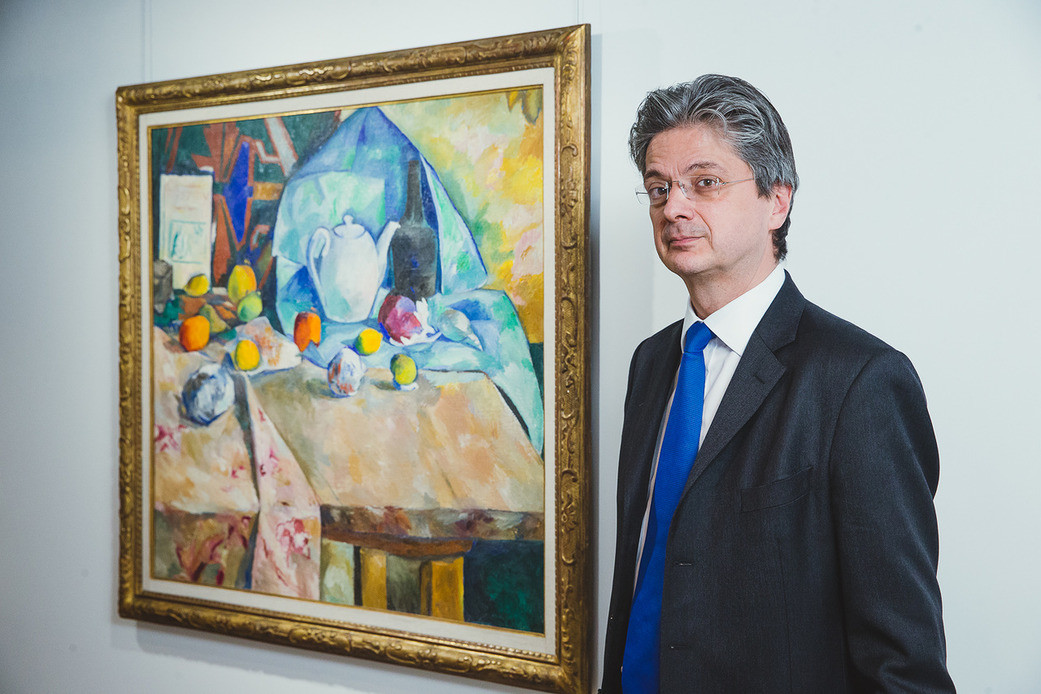
Alexis de Tiesenhausen
Alexander Murachkine / Christie’s
Among the most coveted lots, Christie’s cites Still Life with Teapot and Oranges by Goncharova, which for many years was mistaken for a work by the naturalized French Russian painter Michel Larionov. This oil painting is valued between $656,000 and $918,200 (approximately €565,600 – €791,850). Also deserving of particular attention are The Holy Family by Vereshchagin, painted between 1884 and 1885 and influenced by Joseph Ernest Renan’s Life of Jesus, and Café de la Rotonde by Marie Vassilieff, a student of Henri Matisse and a figure of Montparnasse.
Read also: An Exhibition of Chaim Soutine’s Works Finally Arrives in Russia
Source: Russia beyond the Headlines