
“They looked at the young Moor as if he were a miracle, surrounded him, showering him with greetings and questions; but this kind of curiosity irritated his self-esteem… He felt like some kind of rare animal,” wrote the most illustrious 19th-century Russian poet Alexander Pushkin in his historical novel The Moor of Peter the Great, which describes the life of Ibrahim, an African at the Tsar’s court.
Pushkin, in fact, had personal reasons for writing this. Indeed, while Ibrahim was a national historical figure, a slave from Africa who prospered in Russia, became a nobleman, and helped establish a dynasty, Pushkin was none other than his great-grandson.
Flourishing in Russia
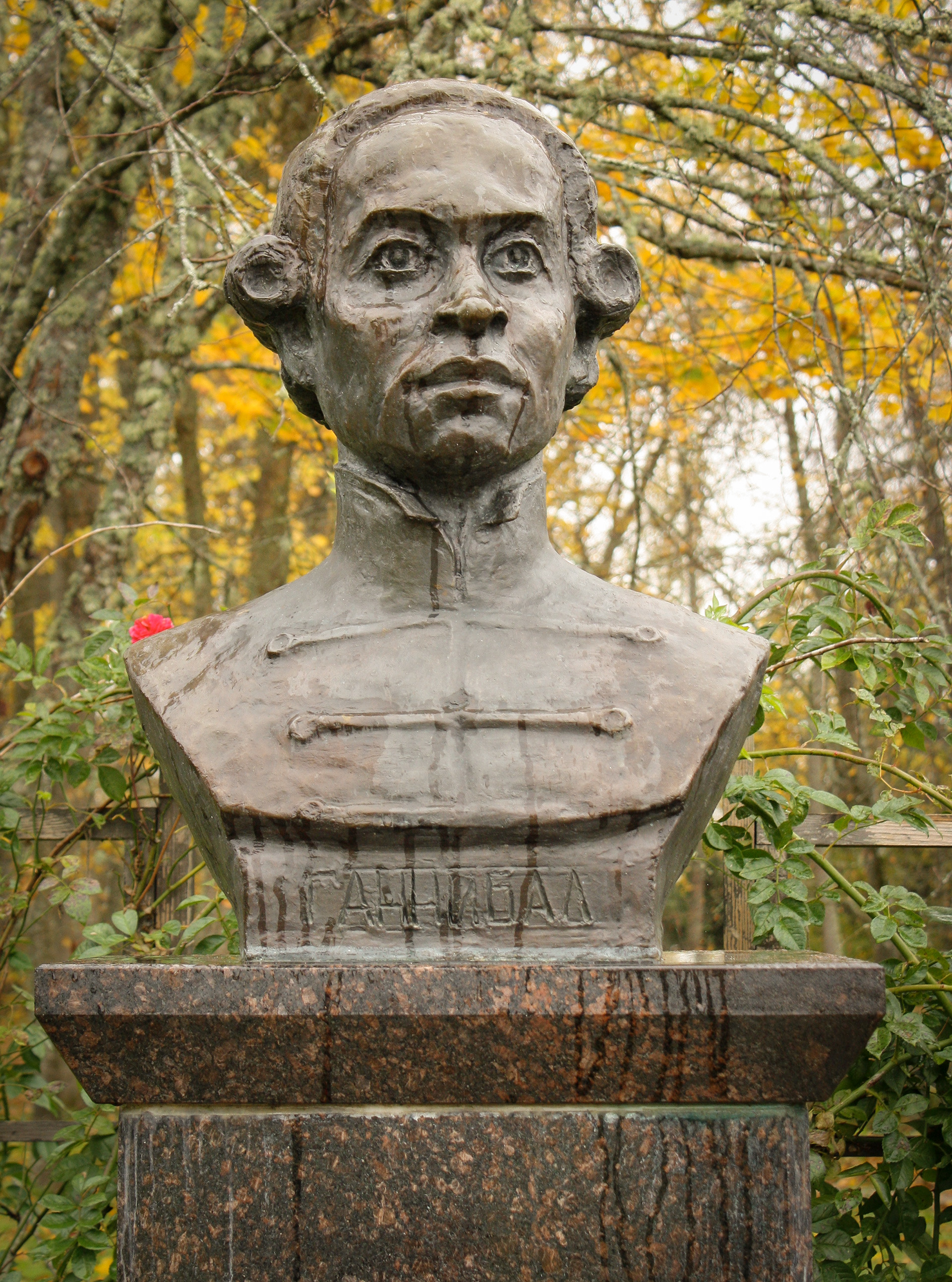
Ibrahim Hannibal
Ludushka/Wikipedia
Several centuries have passed, and it is difficult to determine exactly where Ibrahim (1696–1781) originated. Older versions of his biography suggest he was born in Ethiopia, but a later study conducted by Dieudonné Gnammankou, a Beninese Slavist, argued that Ibrahim actually came from Cameroon.
Read also: The incredible story of the unique (and short-lived) Russian colony in Africa
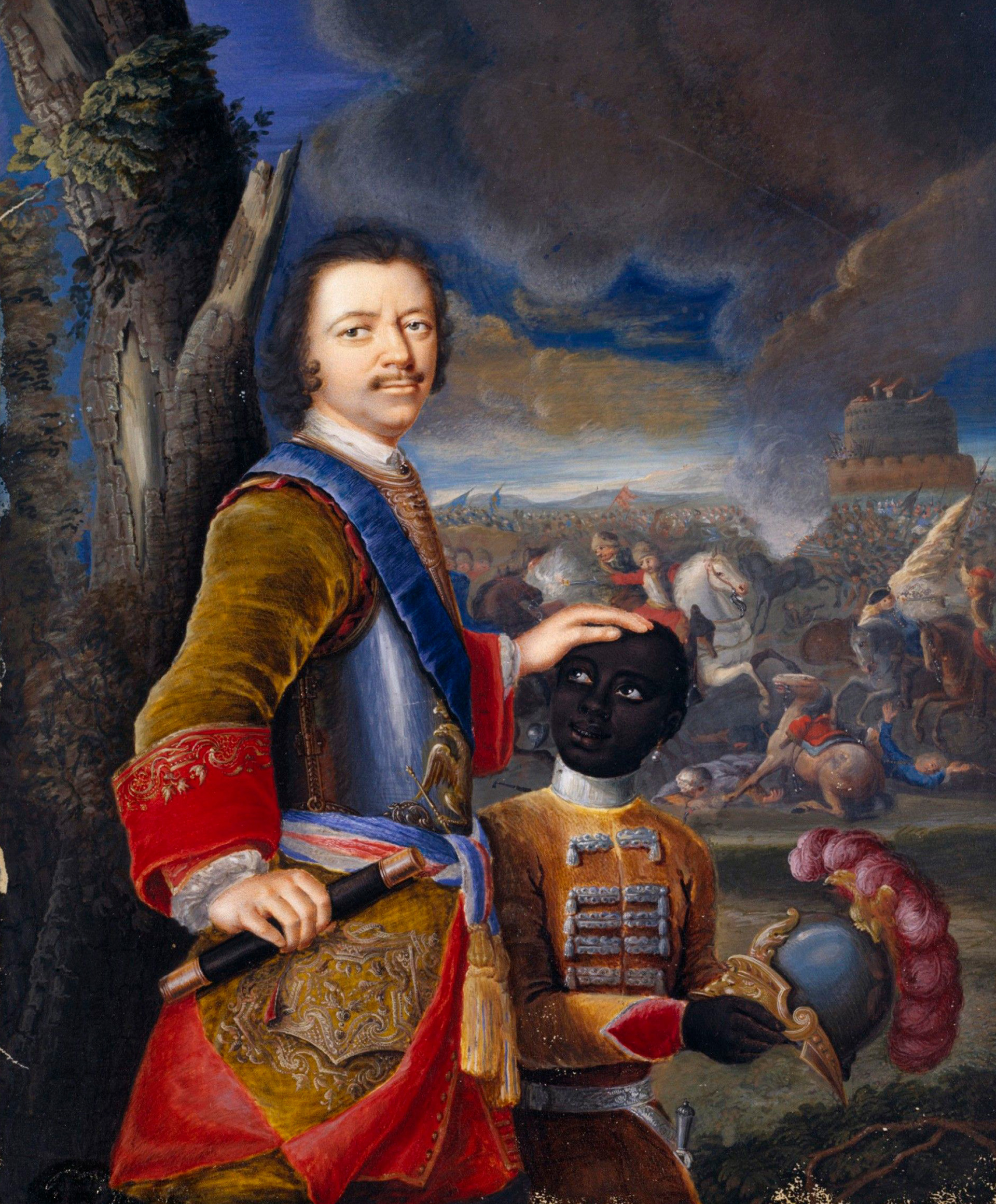
Whatever his native land may have been, it is almost certain that it was the Turks who kidnapped him and sold him on the slave market, through which Ibrahim found himself at the Russian court. However, after welcoming him, Peter the Great treated him with kindness, and not only granted him his freedom but also baptized him Abram Petrovich Gannibal (after the famous North African commander of ancient Carthage, a surname chosen by Ibrahim himself).
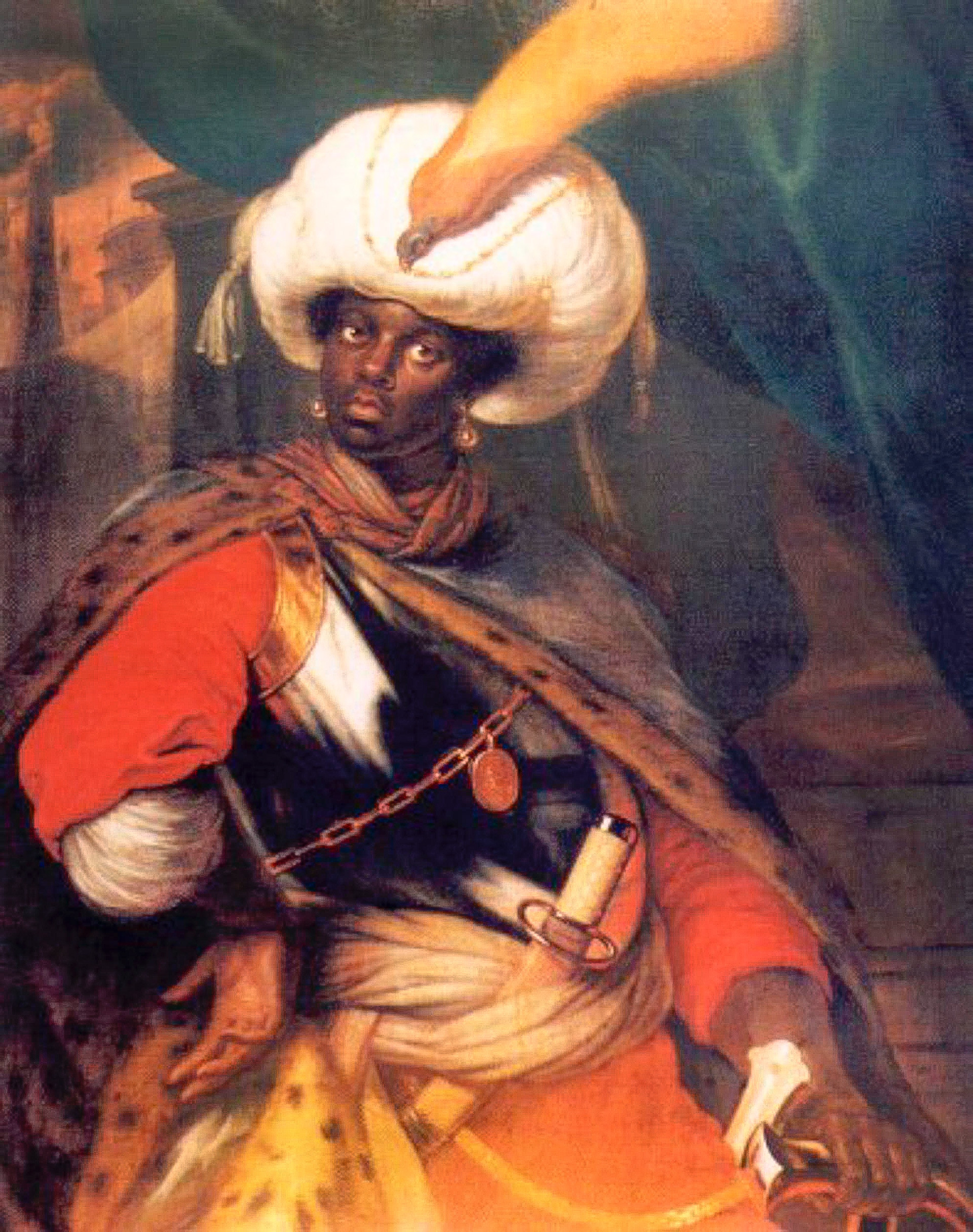
Ibrahim then completed military and engineering courses, studied in France, and served as the Emperor’s secretary. Gnammankou even argues that Hannibal contributed to the development of Franco-Russian relations during his time accompanying his sovereign.
“The African, or should I say the Afro-Russian, helped establish diplomatic, scientific, and cultural relations between two great European nations: Russia and France,” Gnammankou stated during an interview for the TASS news agency.
Hannibal, however, also had his share of difficulties, as after the death of Peter the Great in 1721, he was sent into exile in Siberia. In 1730, he was pardoned, and following the accession to power of Elizabeth I, Peter the Great’s daughter, he regained favor at court and was promoted to governor in Tallinn. In 1742, he was even ennobled and received the estate of Mikhailovskoye in the Pskov region from the Empress. He thus led a long life and had 11 children. Among them was Pushkin’s grandfather, Ossip Hannibal. The poet, moreover, never forgot his African heritage.
Read also: “Russia is my home”: portraits of Africans in Moscow
Black Courtiers
Hannibal’s story is quite unusual, but far from unique. In the 18th and 19th centuries, many people served at the Russian court as “araps.” According to Vladimir Dal’s dictionary (1863), “arap” meant “a dark-skinned person from warm countries, mainly from Africa.” The second meaning was “a doorman, a guard,” and this was the role that fell to the araps at court.
Sophie Buxhoeveden, a lady-in-waiting to Empress Alexandra (wife of Nicholas II), testified: “the black servants, dressed in oriental clothes, gave a special, exotic flavor to the palace.” Their presence symbolized how vast and powerful the empire was, touching the whole world with its influence.
This may obviously seem racist, but keep in mind that such practices were common in the courts of most European monarchies, and such positions were very well paid.
“The araps were among the few people in the Tsar’s palace who received a salary, and it was quite substantial,” explains historian Igor Zimin in his book The Court of the Russian Emperors. Most servants were provided with room and board.
The Russian Dream
In the 19th century, many Africans in the United States saw Russia as a chance for a better life, to escape the brutality of American slavery.
Read also: These foreigners attracted by the Siberian cold
“The first American arap at the Russian court was a former valet of the US envoy to Saint Petersburg, who obtained his new position in 1810. It seems that news about this good job quickly spread in American ports, and many black adventurers rushed to Russia, usually as sailors aboard the few ships heading to Saint Petersburg,” Zimin recounted.
Competition for employment was intense, however, and during the reign of Nicholas I (1825-1855), the number of court araps was limited to eight. Different empresses who succeeded him and had a penchant for exoticism nevertheless relied on the presence of dozens of black servants. The darker-skinned and taller the potential employee, the greater their chances of being selected, Zimin specifies. Furthermore, anyone wishing to serve at court had to be a baptized Christian (not necessarily Orthodox).
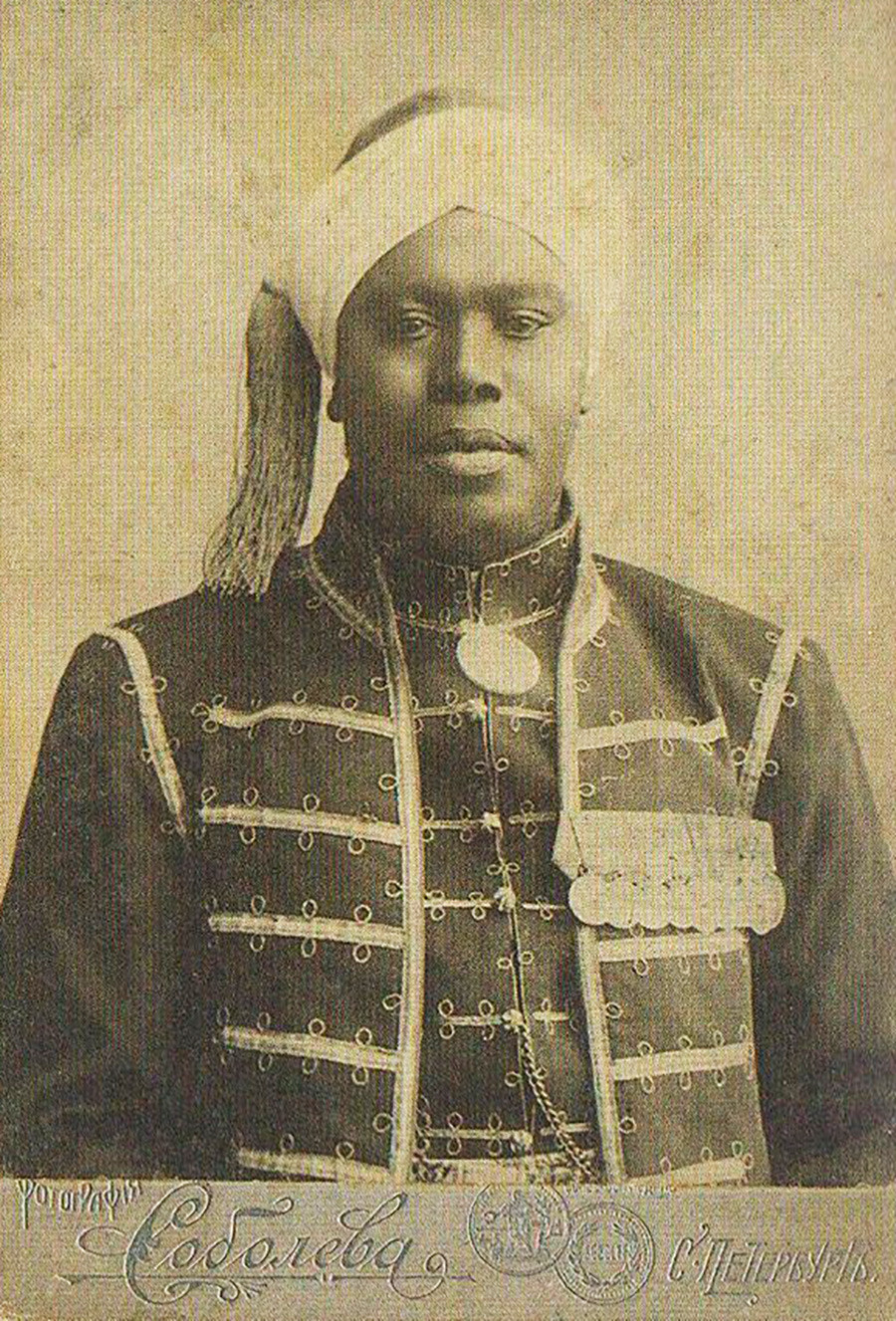
George Maria
Public Domain
Americans were not the only ones to become araps. Nina Tarassova, an employee of the Hermitage Museum, for example, tells the story of George Maria, who came from the Portuguese colony of Cape Verde, served many years at the Tsar’s court, and remained in Russia long after the abdication of Nicholas II.
“His two sons fought during World War II; one died and the other survived until Victory Day,” she states.
As you will have understood, some araps managed to put down deep roots in Russia. Generally, however, their heyday ended with the fall of the Empire in 1917. During the Soviet period, a new type of Africans, as well as African Americans, nevertheless found opportunities in the country: as students, engineers, and socialist leaders. But that is another story entirely.
In this other article, discover the incredible fate of those French women who decided to follow their Decembrist husbands exiled to Siberia.
Source: rbth.com