

Let us examine the legend of the miraculous rescue of Nicholas II’s daughter, who allegedly escaped her family’s execution.
Who created the legend of Anastasia?
We cannot say with certainty exactly why Anastasia was “chosen” by public gossip, but likely because she was the youngest daughter of Emperor Nicholas II and Alexandra Feodorovna. Born in 1901, she was the family’s fourth daughter, and it was only after her, in 1904, that Alexei, the long-awaited heir, was born.
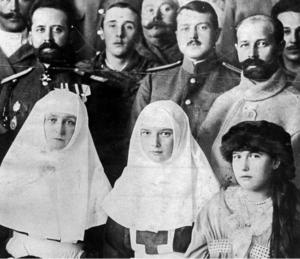
Alexandra and her daughters Tatiana and Anastasia
Public domain
There is no clear account nor any written evidence that any particular person created this legend. In Russian history, there have been many impostors claiming to be miraculously saved members of the imperial family: there were three false Dmitris (all claiming to be the son of Ivan the Terrible), and Emelian Pugachev, the Cossack revolutionary of the 1770s, who claimed to be Peter III, who had supposedly escaped his assassination.
What were the circumstances of Anastasia’s birth?
Before Anastasia’s birth, her mother, Empress Alexandra, was very anxious to conceive an heir. She already had three daughters; however, according to Russian succession laws, a grand duchess could only inherit the throne in the absence of any male line of succession. Furthermore, Grand Duke Michael, Nicholas II’s younger brother, was next in line, which did not please the ruling family, and Empress Alexandra in particular.
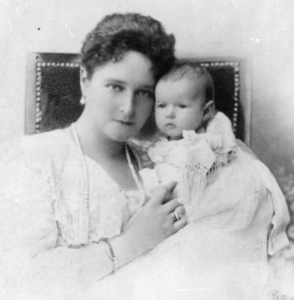
Alexandra Feodorovna and Anastasia
German Federal Archives
The latter then plunged into philistine mysticism. In 1901, a French hypnotist and charlatan named Nizier Anthelme Philippe appeared at the Russian court. His methods were truly “impressive”: for example, he gave Alexandra an icon with a small bell as a gift that would “alert her when ill-intentioned people approached her.” Philippe also “predicted” the birth of a son, and soon Anastasia was born, to the great disappointment of many members of the imperial family (except for her mother and father, of course). “Alix [diminutive of Alexandra] gave birth to a daughter—again!”, wrote Maria Feodorovna, Nicholas’s mother, to her daughter, Grand Duchess Xenia.
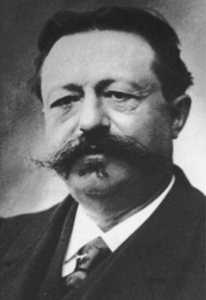
Nizier Anthelme Philippe, known as Master Philippe
Public domain
Who was Anastasia really?
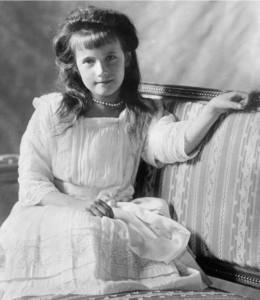
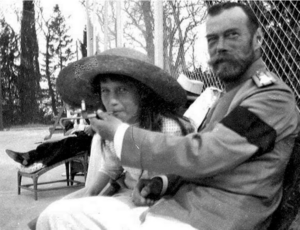
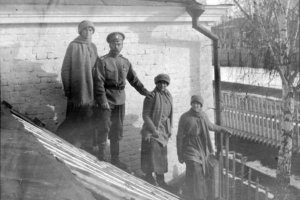
There is not much information regarding Anastasia’s private life, primarily because it did not truly differ from that of the Tsar’s other daughters. She received a formal education at home, although she was not a diligent student. She loved singing and dancing, and frequently painted watercolors.
Public domain
Public domain
Public domain
What were the circumstances of Anastasia’s death?
Anastasia and her family were shot on the morning of July 17, 1918. Their bodies were taken to the Four Brothers mine, near the village of Koptiaki, 20 kilometers from Yekaterinburg. There, the bodies were burned with sulfuric acid so they could not be identified, and then thrown into the mine. The following night, Yakov Yurovsky, the primary official responsible for the execution, returned to the site with his assistants to exhume and move some of the remains to another location. This measure was intended to confound any search for the imperial family’s remains. If someone were to find a portion of them, the count would not match.
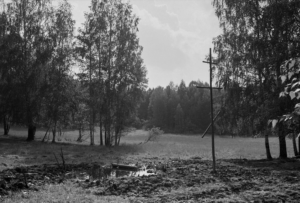
Near the Four Brothers mine
Anatoly Semekhine/TASS
When were Anastasia’s remains discovered?
The remains of Nicholas, Alexandra, and three of their daughters (including Anastasia, by later deduction) were first discovered in 1979 at Porosyonkov Log (Piglet’s Ravine), about 6 kilometers from the mine, but were kept secret until the collapse of the USSR. Further investigations in 1991 showed that the remains of Alexei and one of the daughters, Grand Duchess Maria, were missing from the site. In 2007, they were finally found in another nearby pit, with their identity confirmed the following year through genetic testing. Further research conducted in 2019 by the Investigative Committee of Russia confirmed the results, which were also approved by a disinterested party – Michael Coble, from the Armed Forces DNA Identification Laboratory in Rockville, Maryland.
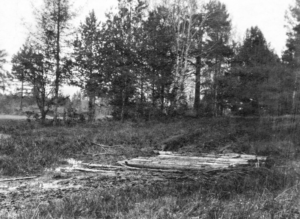
Porosionkov log
Public domain
How many women posed as Anastasia?
Rumors that Anastasia had managed to escape the shooting of the Tsar’s family and survive appeared immediately after 1918 in European circles of Russian emigres. In 1920, in Berlin, a young woman, whose name would later be revealed as Anna Anderson, was prevented by a police officer from jumping off a bridge. She was apparently in a state of nervous breakdown and was sent to a psychiatric institute in Dalldorf (now Wittenau, a district of Berlin). Two years later, she unexpectedly claimed to be Grand Duchess Anastasia. We discussed this in this other article.

Among other famous false Anastasias, we can cite Eleonora Krüger (1901–1954), who posed as the Grand Duchess in a Bulgarian village; Nadezhda Vasilyeva (?—1971), who suffered from mental illness and spent years in psychiatric institutions and prisons in the USSR, eventually dying of starvation in an asylum on Sviyazhsk Island, Tatarstan; and Natalia Bilikhodze, a Georgian woman who “revealed” herself to be Anastasia in 1995. She died in 2000 and is considered the last false Anastasia. In total, more than 30 usurpers have been identified. One Russian man, Anatoly Ionov (born in 1936), even claimed to be the Grand Duchess’s son!
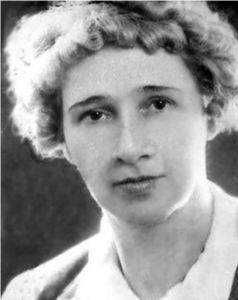
Eleonora Krüger
Public domain
Source: Russia Beyond