
The history of Anglo-Russian friendship officially began in the 16th century, when the British, led by Sir Richard Chancellor, in search of a route to India, landed in northern Russia. This is how commercial relations between the two countries began. The building of the trading company – the Old English Court – is still located near the Kremlin (it now houses a museum). But in fact, the countries had contacts as early as the 11th century.
1. Prince Vladimir Monomakh and Gytha of Wessex
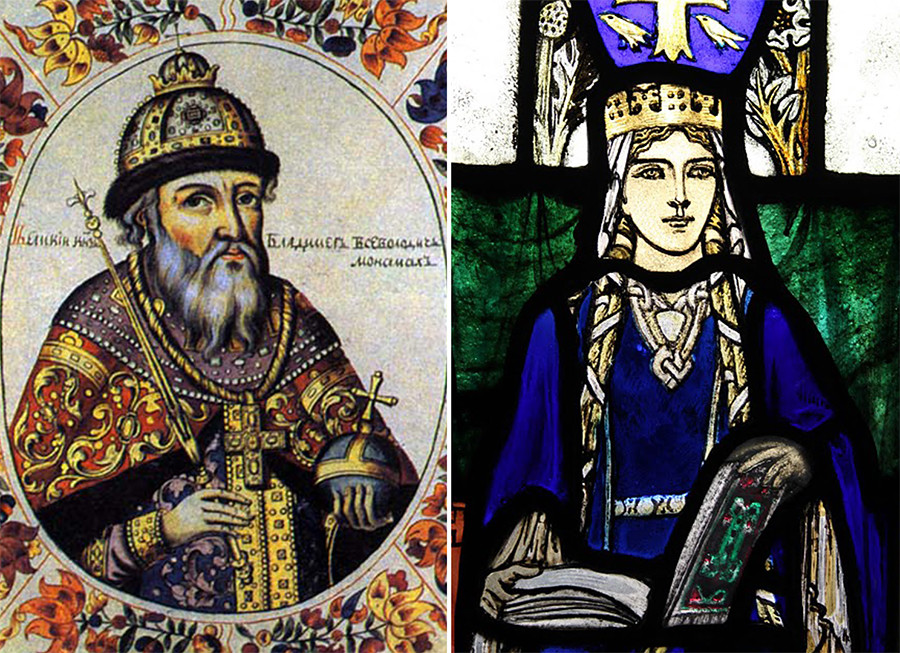
The daughter of the last Anglo-Saxon king, Harold II, Gytha, fled to Europe after her father’s death in battle and the fall of his dynasty. In 1074, her uncle, the Danish king, married her to the Russian prince Vladimir Monomakh. The future Grand Duke and the English princess had five children.
Read also: Why did Prince Harry wear Nicholas II’s uniform for his wedding ceremony?
Thus, Gytha can be considered the ancestor of the great Alexander Nevsky. There were also legends indicating that she was the mother of Yuri Dolgoruky, the founder of Moscow, but this is not true: he was born to Vladimir Monomakh’s second wife.
2. Ivan IV the Terrible and Elizabeth I
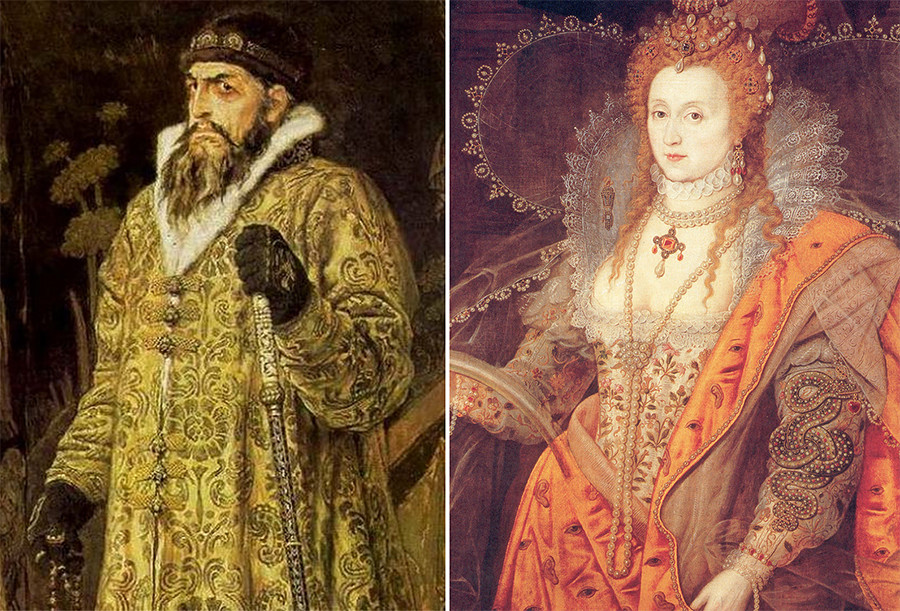
The distant and inaccessible queen was the only woman with whom the formidable king maintained a correspondence. Their epistolary friendship lasted 12 years (1562–1584), until the death of Ivan. Generally, they discussed the commercial affairs of both countries and the problems encountered by merchants.
The correspondence also evoked “secret matters of great importance,” which have led historians to assert that Ivan, through intermediaries, courted Elizabeth, but she likely rejected the proposal.
There is even a legend claiming that the Queen received a portrait of the Tsar and did not care for it. Incidentally, Ivan the Terrible, much like Elizabeth’s father Henry VIII, had many wives; however, the former sent them to monasteries, while the latter had them executed.
3. Peter I and William III
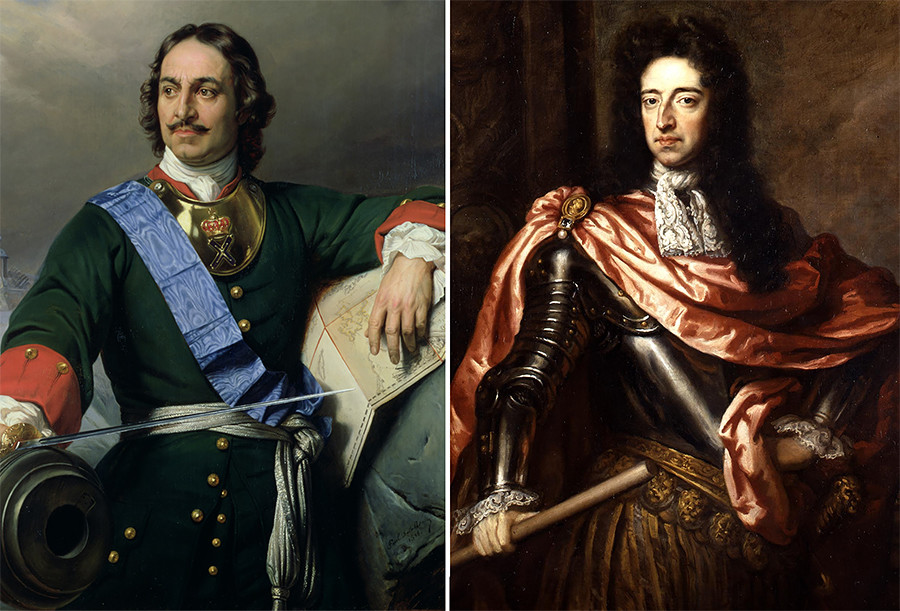
The first Russian emperor, Peter, arrived in England in 1698 at the personal invitation of William III. As part of his “tour” of Europe, Peter familiarized himself with the work of the best shipbuilders in the Netherlands, and also saw how hospitals, schools, and various factories operated, also familiarizing himself with the structure of windmills.
Read also: Legends and myths about Anne of Kyiv
In England, Peter continued to study shipbuilding and took an interest in the structure of the fleet. It can therefore be said that some of Peter’s famous innovations are due, among other things, to England. A famous portrait of the Russian Tsar by Gottfried Kneller also dates from this trip.
4. Grand Duchess Maria and Prince Alfred, Duke of Edinburgh
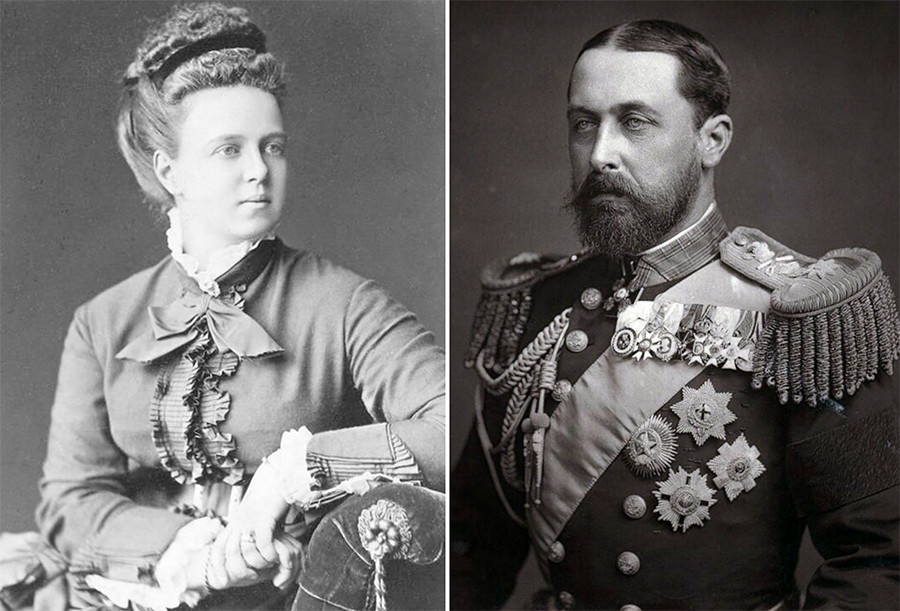
The beloved daughter of the Russian Emperor Alexander II, Maria, married the second son of Queen Victoria, Prince Alfred, Duke of Edinburgh. In London, a scandal erupted—the doting father demanded that the expression “Your Imperial Highness” be used when addressing Maria at court, a title that had been given to her at birth. Furthermore, Alexander II and Maria herself were indignant that the latter’s position at court was lower than that of the Danish King’s daughter—the wife of Victoria’s first son, Albert (the future Edward VII).
Queen Victoria was enraged because, according to marriage law, Maria was to be called “Her Royal Highness,” but she eventually relented, and the Russian princess was called “Her Imperial and Royal Highness.” A somewhat long but fair formula. And yet, Maria never managed to rise above Albert’s wife…
Read also: What Peter the Great brought back from Europe to Russia
5. Nicholas II and George V
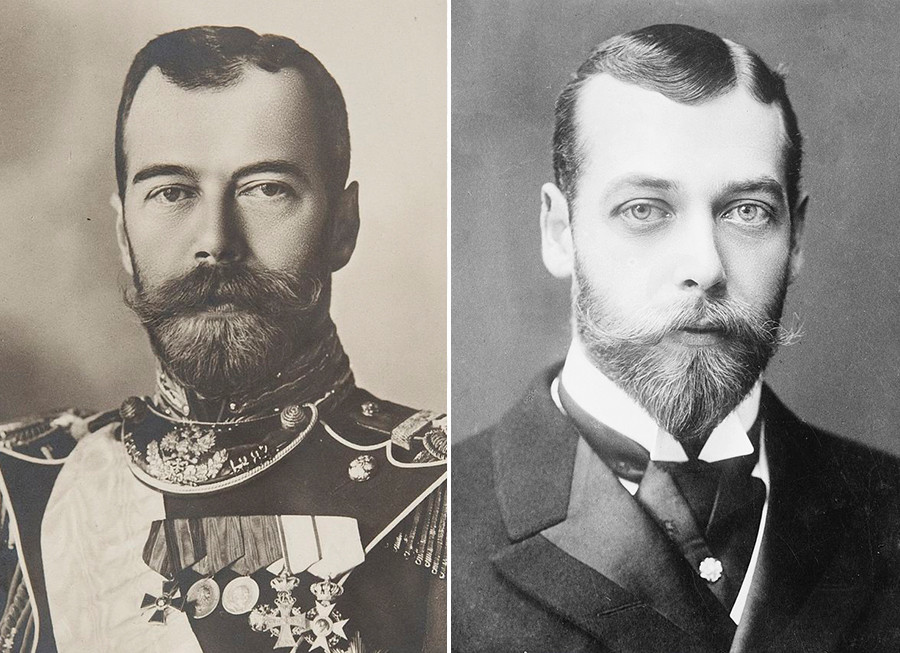
These cousins look like twins. Their resemblance is simply incredible. The future English monarch was the grandson of the “grandmother of Europe,” Queen Victoria, through the latter’s son, Prince Albert (the future Edward VII), and that same unbearable Danish princess mentioned in the previous paragraph. The sister of that same Danish princess was Maria Feodorovna, wife of the Russian Emperor Alexander III and mother of Nicholas II.
Nicholas held several high British decorations—Queen Victoria proclaimed him a Knight of the Garter, King Edward VII awarded his nephew the title of Honorary Admiral of the Fleet of the British Navy, and his cousin George, in the midst of the First World War, made Nicholas a Field Marshal of the British Army.
6. Nicholas II and Alix
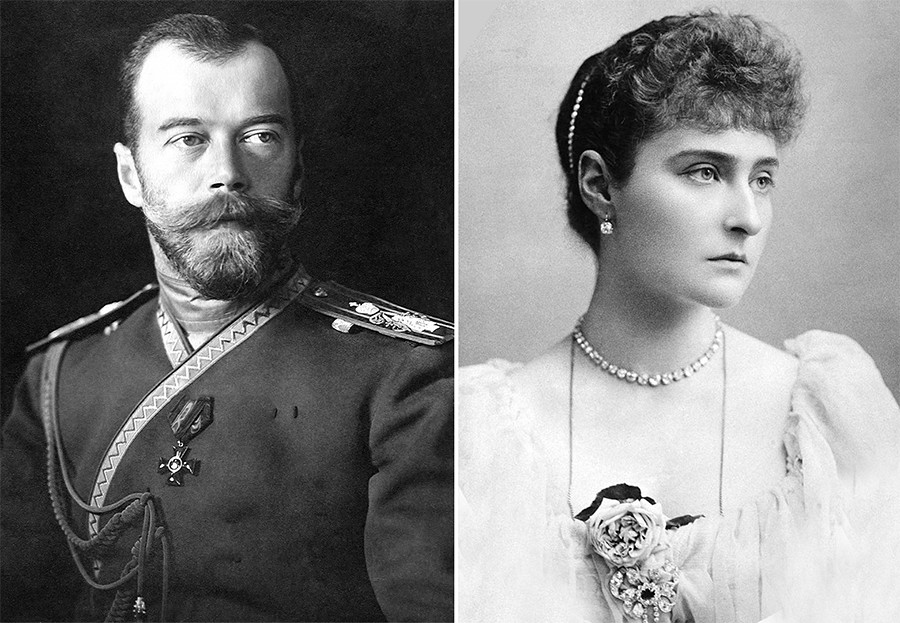
The wife of Nicholas II, Alexandra Feodorovna, Duchess of Hesse-Darmstadt (Princess Alix of Hesse and by Rhine), was another granddaughter of Queen Victoria—and therefore a cousin of George V. She was the daughter of Alice, Victoria’s second daughter.
Nicholas and Alexandra met in Russia when the young princess came for the wedding of her older sister Ella and Grand Duke Sergei, Nicholas’s uncle. The future emperor was promised to another woman, but Nicholas fell under the spell of the “German” Alix, and her sister Ella helped the young lovers begin a correspondence. Nicholas’s father, Alexander III, was in poor health and decided not to delay matters and to bless the marriage.
Read also: Who Among the Romanovs Survived the Red Terror a Century Ago?
The young lovebirds married in haste after the Emperor’s death, causing surprise within the court. On their wedding day, the Khodynka Tragedy occurred—thousands of people died in a stampede while coming to collect free trinkets.
Nicholas, Alexandra, and all their children perished, executed by the Bolsheviks. Despite their family ties, George V, for example, feared granting refuge to his cousins during the October Revolution of 1917.