
1. Do Not Confuse Kokoshnik and Venets

We have all seen this photograph, which became the subject of numerous jokes: two men and a woman devouring a hot dog in the hundredth minute of the thrilling Russia-Spain match, in the round of 16 of the World Cup. The most knowledgeable internet users then pointed out that they were not wearing a kokoshnik, but a venets, that is to say a headdress that does not cover the hair but simply encircles the head, like a crown.
Also, perhaps you noticed the photograph of Kate Middleton at the christening of her newborn, Louis? Well, her headdress could be compared to a venets.
But the main difference between these two accessories lies in the high crest of the kokoshnik, resembling a rooster’s comb (moreover, in medieval Rus’, the hen was called “kokoch”).
Read also: The Kokoshnik, This Authentic Russian Headdress Attempting to Find a Second Wind
2. Only Married Women Wore Them
In ancient Rus’, wives were required to cover their heads and conceal their hair. A fabric was therefore sewn to the “crest” of the kokoshnik, which covered the head, and sometimes even the neck.
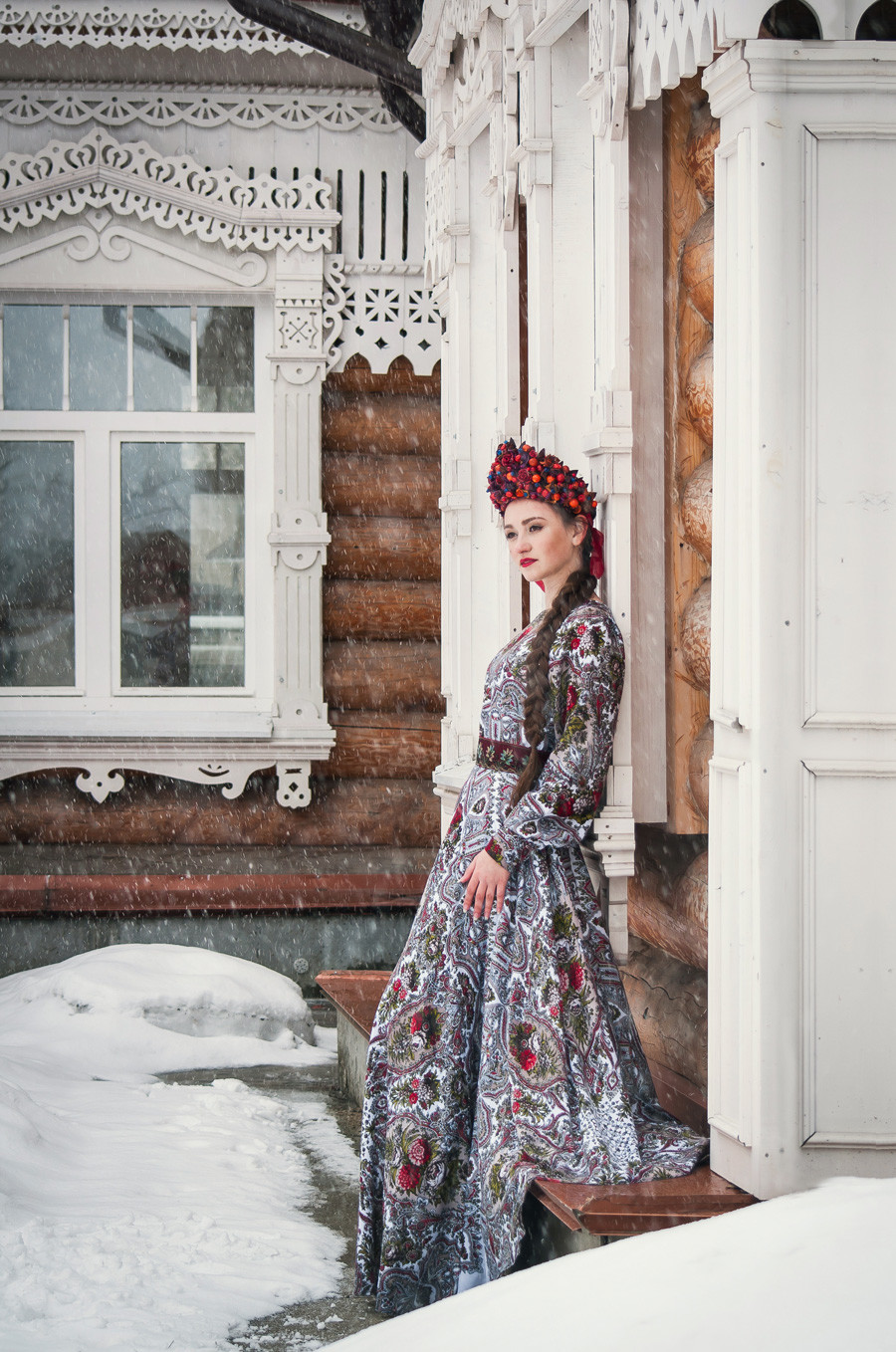
Thus, it was possible to determine a woman’s marital status by examining her headdress and hair. A long braid meant that the young woman was eligible for marriage. If nature had not endowed her with good hair, she would attach horsehair to it, in order to prove that she was in good health and able to bear children.
Married women, on the other hand, wore two braids and wrapped them around their heads.
3. Only During Festivities
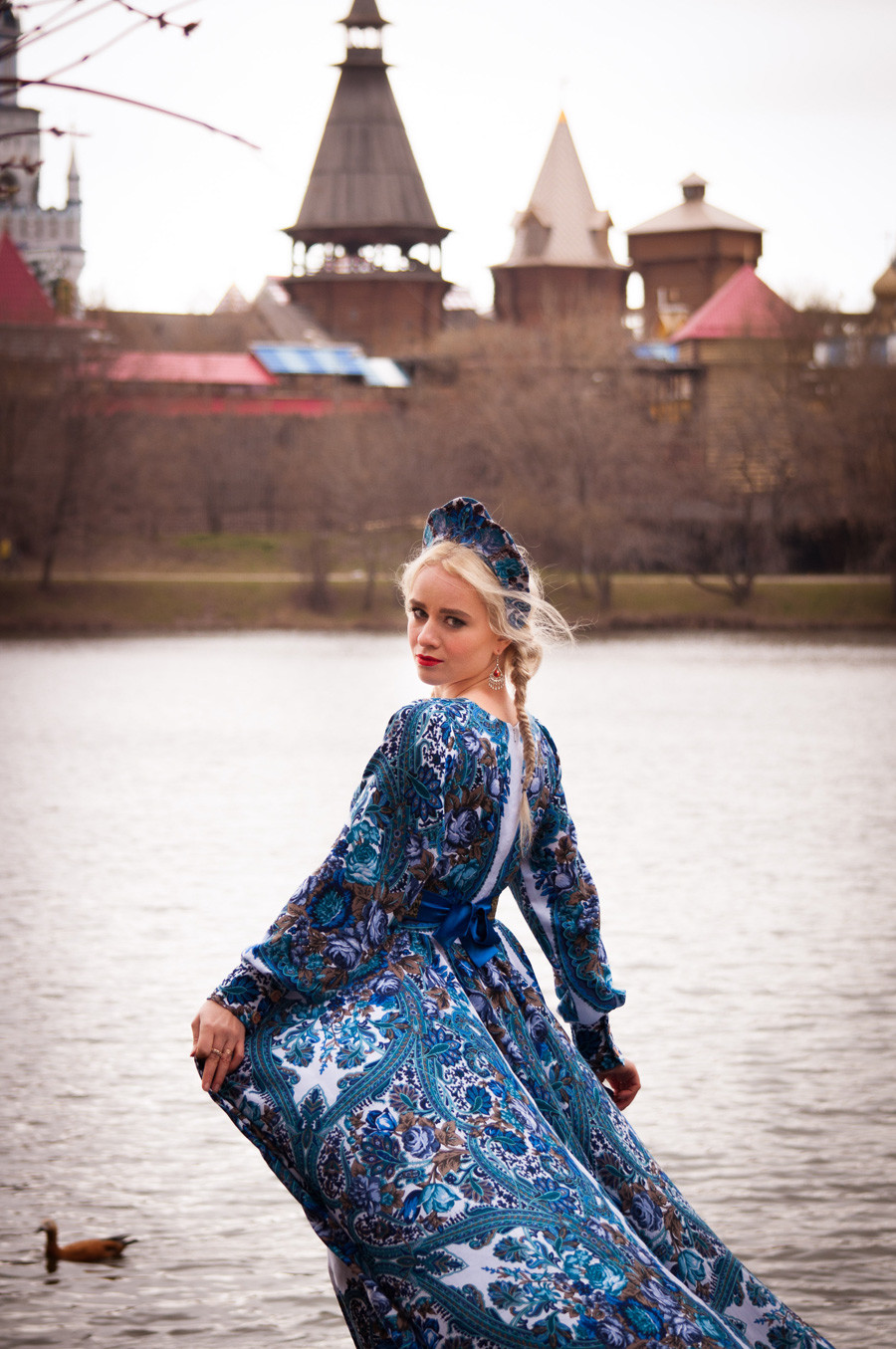
The kokoshnik was often adorned with expensive fabrics, gemstones, and pearls. They were therefore carefully preserved, worn only on grand occasions, just a few times a year. They were also passed down from generation to generation, as heirlooms.
In everyday life, women adorned their heads with a “povoynik”: soft caps around which fabric was wrapped to conceal their hair.
Read also: Ivan Bilibin, the Artist Who Brought Russian Fairy Tales to Life
4. Multitude of Varieties
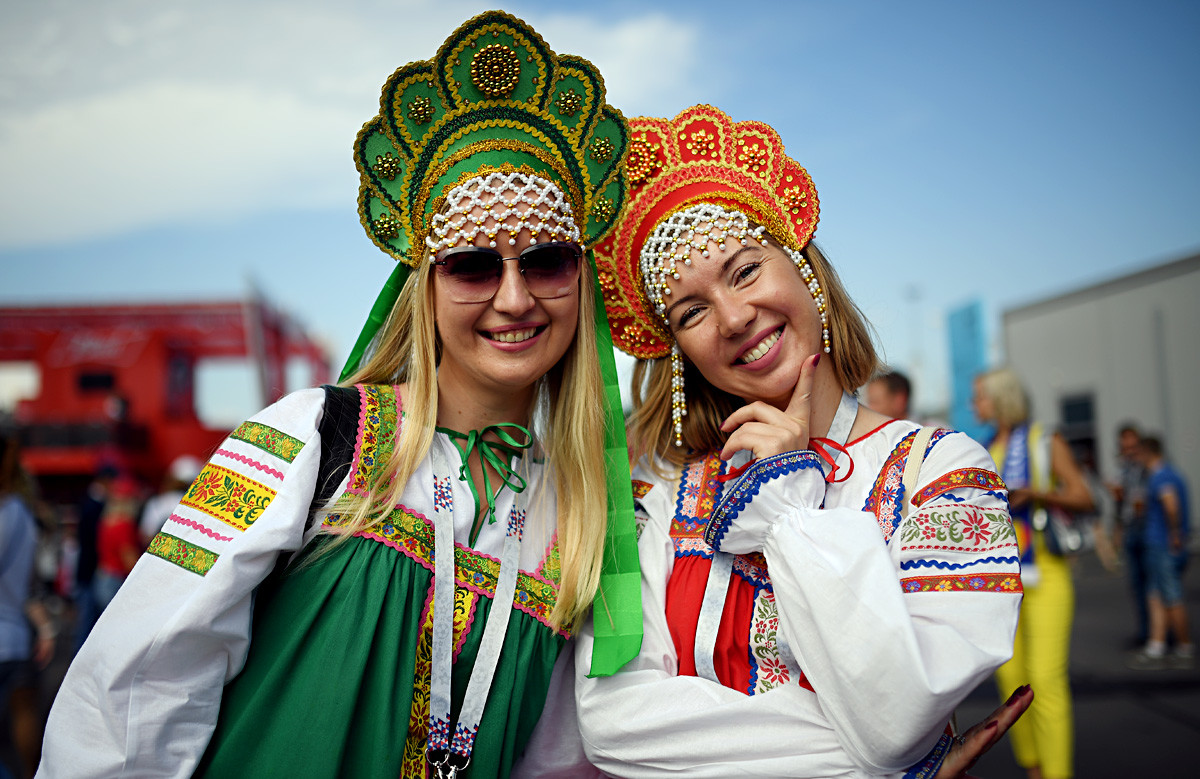
The most famous model is the unicorn kokoshnik, with a crest peak shaped like a triangle or crescent. But there were also cylindrical kokoshniks with a flat circular base, or others shaped like a saddle, resembling helmets. Nearly each of Russia’s numerous regions had its own variants.
5. The Tsars Used Them for Political Purposes
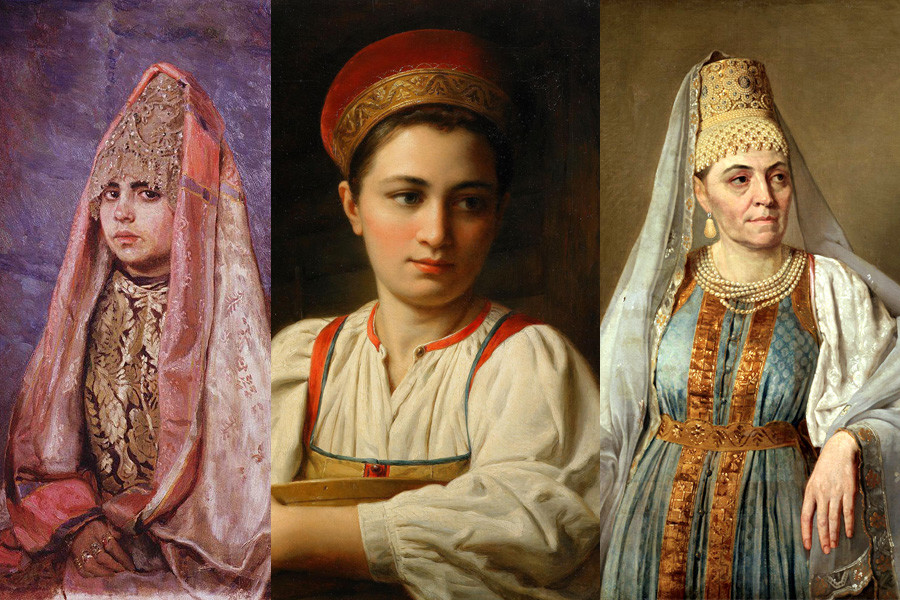
Struggling against the Rus’ of the boyars (aristocrats), Peter the Great banned court ladies from wearing kokoshniks and also popularized European dresses with décolletage. A double upheaval for Russian women. Since then, the kokoshnik has therefore remained associated primarily with the merchant and peasant classes.
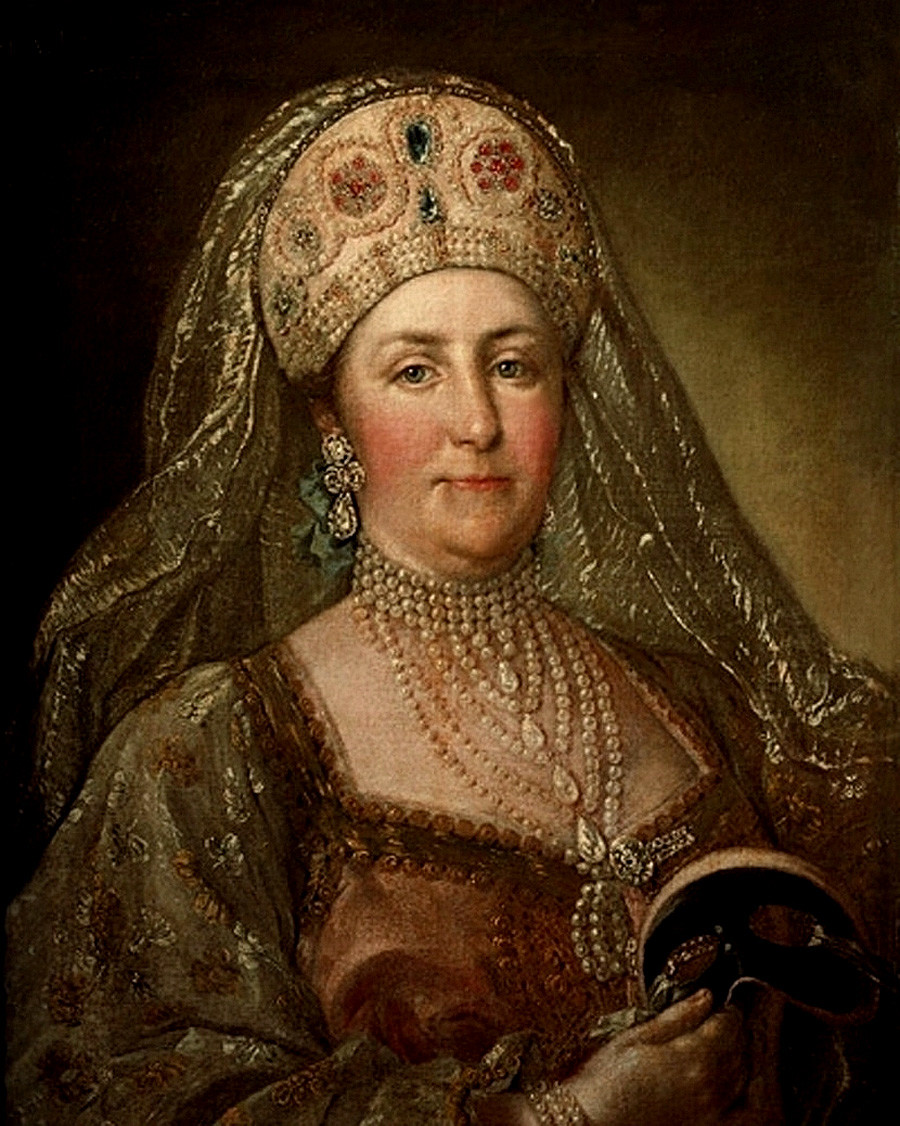
Coming from Germany, Catherine II, for her part, to better integrate, decided to emphasize her preference for Russian traditions and therefore gave the kokoshnik a prominent place in ball costumes. She regularly posed wearing this accessory for portrait painters.
Read also: Can You Guess What These Nine Russian Objects from Olden Times Were Used For?
During the war against Napoleon in 1812, Russian high society, then French-speaking, chose to turn once again to traditional costume. Consequently, throughout the 19th century, it became increasingly common to see portraits of court ladies and empresses wearing a kokoshnik.
6. Depicted on Playing Cards
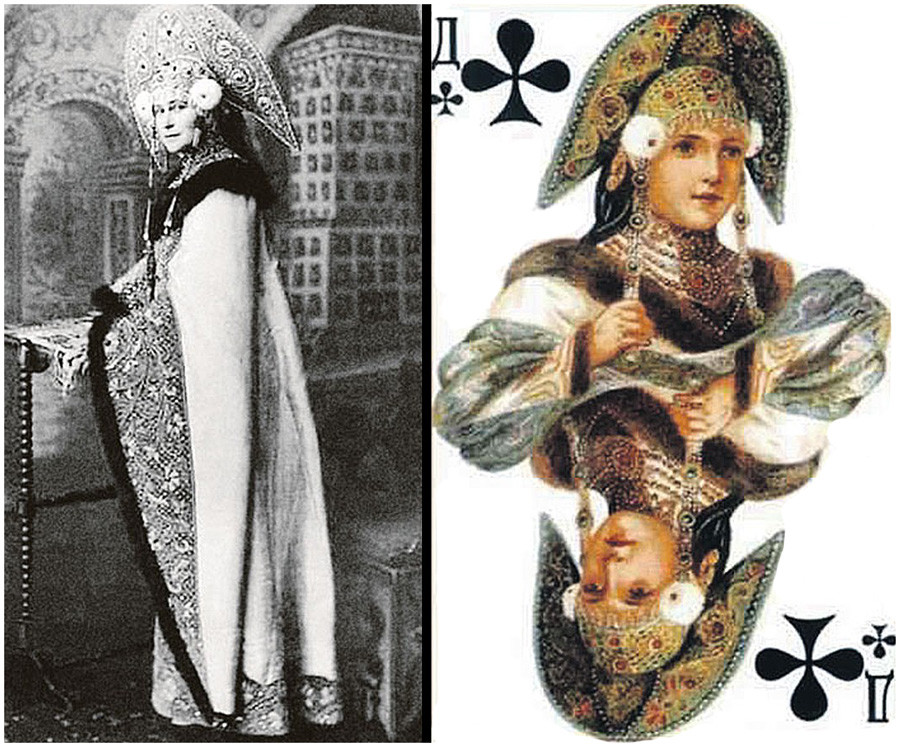
In 1903, Tsar Nicholas II organized the famous costume ball celebrating the jubilee of the Romanov dynasty. The guests created traditional Russian costumes from the era preceding Peter the Great, lavishly adorning them with precious stones and expensive fabrics. Women favored kokoshniks and sarafans (straight sleeveless dresses).
During this ball, numerous photographs were taken, and these costume examples were used on the “Russki stil” (The Russian Style) playing cards, created in 1913. Nicholas II appears on them as the king of hearts.
Incidentally, Queen Amidala’s Gold Travel costume in Star Wars is also inspired by this imperial ball.
7. Fashionable in 1920s Europe
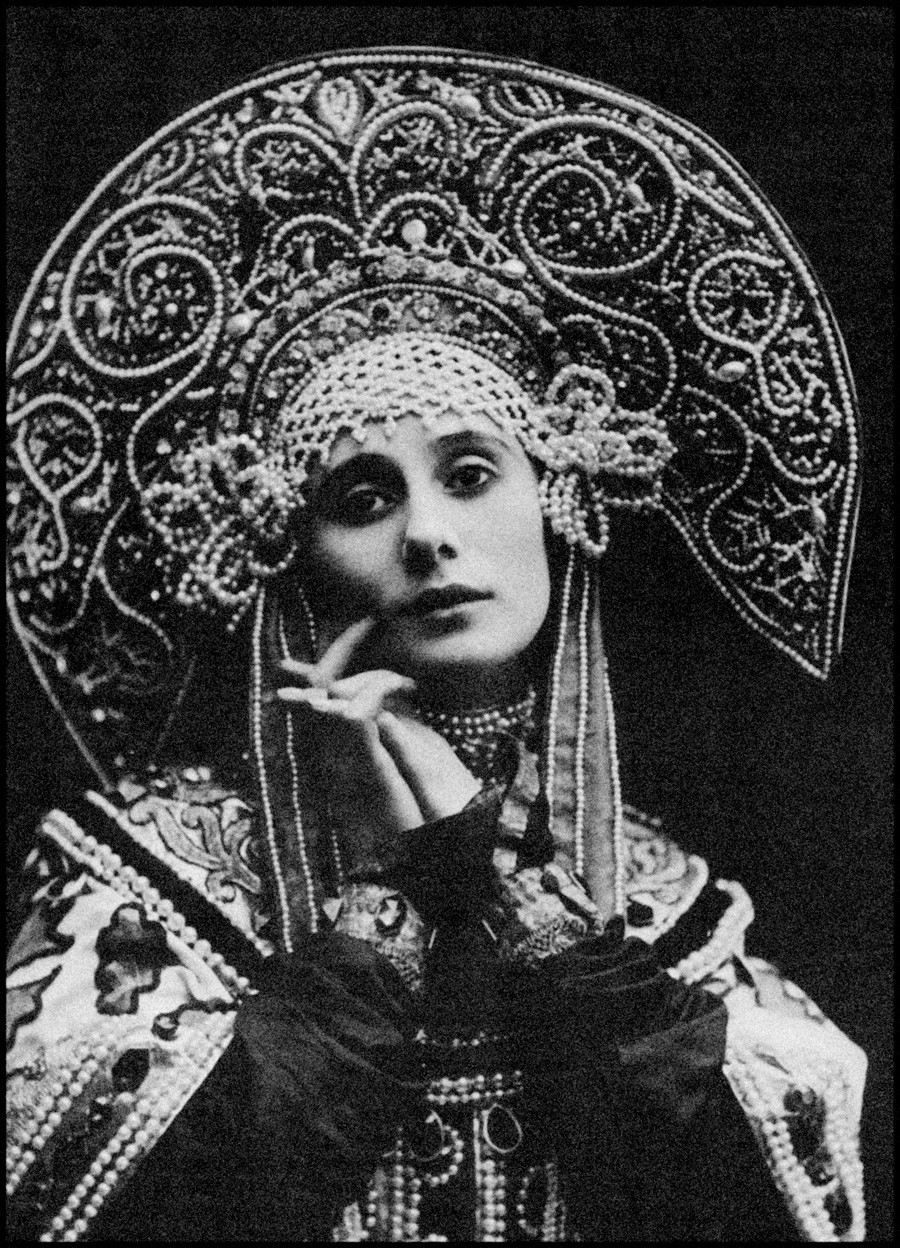
Thanks to the success of certain Russian emigrants and ballerinas in Europe, the kokoshnik became a fashionable accessory among European brides. Mary of Teck, wife of George V, wore one at her wedding. Ballerina Anna Pavlova danced in a kokoshnik as part of Diaghilev’s Ballets Russes, while opera singers, actresses, and fashion designers were immortalized in society photographs wearing this famous headdress.
Read also: The Last Ball of the Romanovs Through Sublime Colorized Photographs
8. Entered Pop Culture
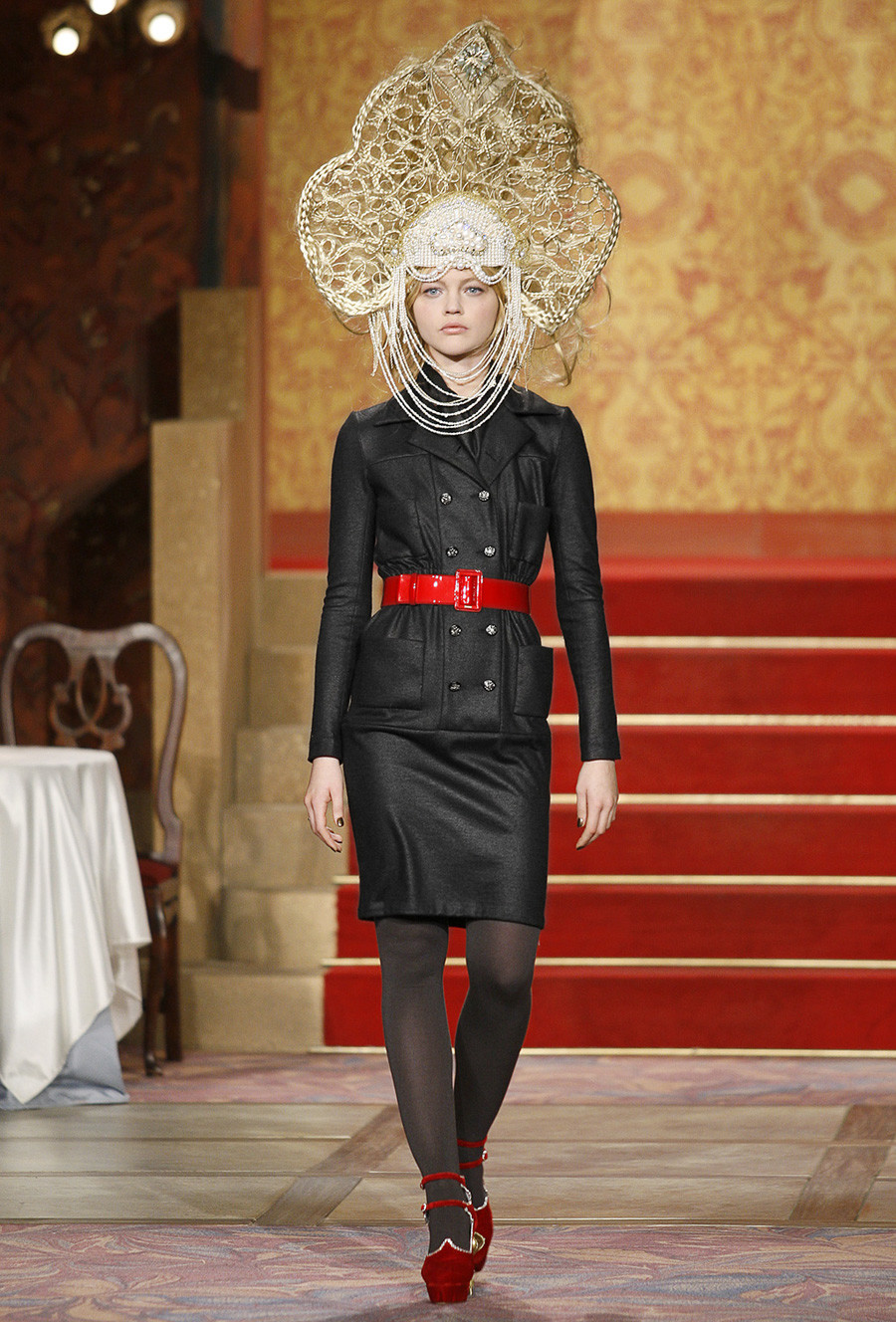
In the Chanel Paris-Moscow pre-collection for Fall 2009, Karl Lagerfeld presented his vision of the kokoshnik and Russian nesting dolls.

In 2011, Courtney Love attended the “Piknik Aficha” music festival in Moscow wearing a kokoshnik, while Jennifer Lopez was photographed in 2014 wearing a modern version of this accessory for the Russian edition of Harper’s Bazaar magazine.
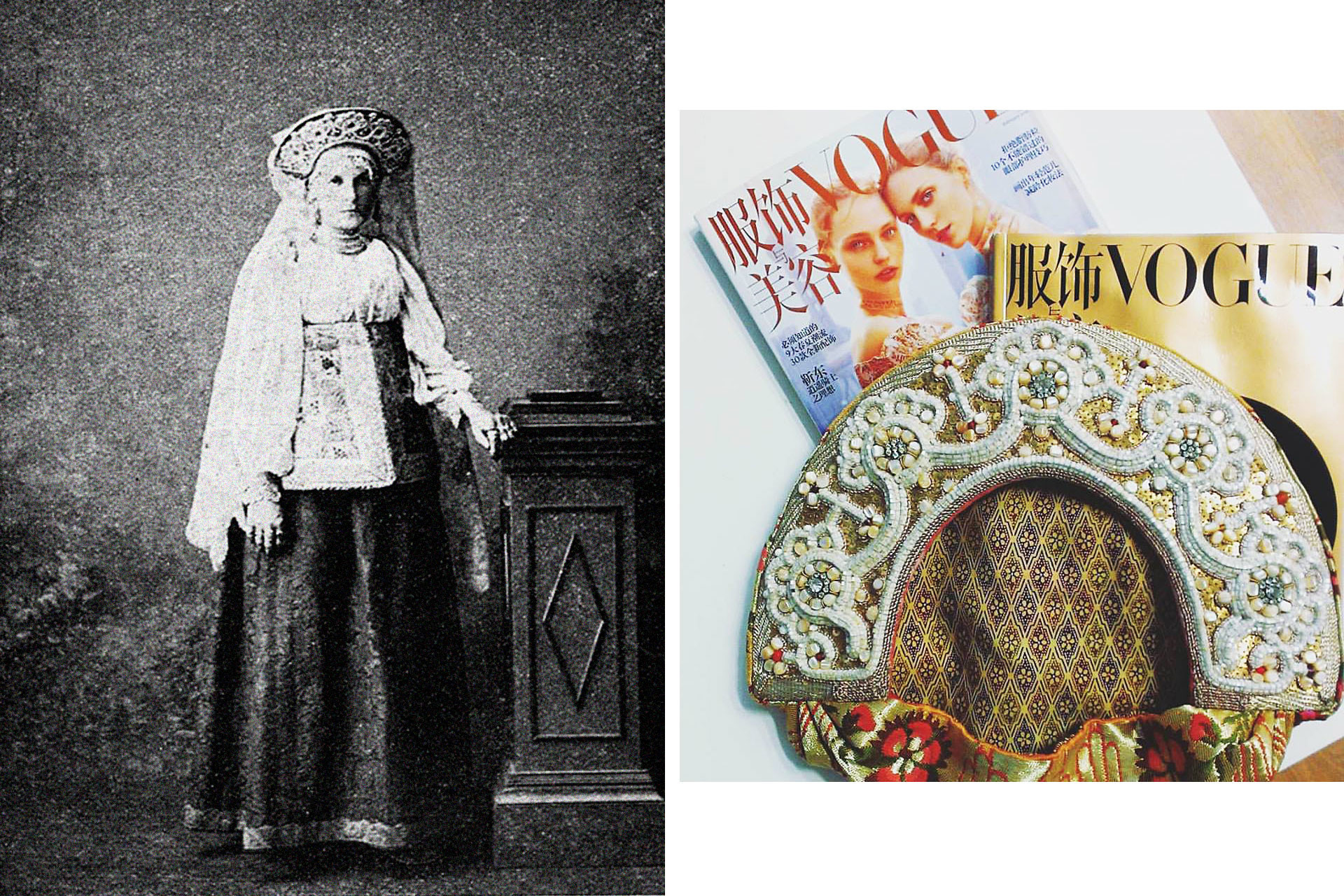
Contemporary painters are also interested in the kokoshnik. Johann Nikadimus, for example, reproduces models depicted in the illustrations of Ivan Bilibin and the paintings of Viktor Vasnetsov.
Source: rbth.com